Vietnam Fruits: 20+ Must-Try Fruits, Seasonal Guide & Local Tips
If you’ve spent even one afternoon wandering a Vietnamese market, you already know: fruit isn’t a side note here. It’s a lifestyle. Stacked into vivid pyramids along every sidewalk, piled onto motorbike carts, and served halved on ice at roadside stalls, Vietnam fruits are impossible to ignore, and equally impossible to resist.
This guide covers the full Vietnam fruits list with details on flavour, how locals eat each one, the best regions to find them, and a seasonal calendar so you never miss peak season. Whether you’re hunting exotic fruits in Vietnam for the first time or you’ve been here for years and want to go deeper, this is your starting point.
- Check out our Vietnam private tour
Vietnam Fruits List: What’s in Season and Where to Find It
Vietnam stretches over 1,600 kilometres from north to south, and that geography matters enormously when it comes to fruit. The Mekong Delta in the south is the country’s fruit basket, humid, lush, and wildly productive. Central Vietnam has its own specialties. Northern provinces like Bac Giang grow some of the best lychee in the world. Knowing where a fruit comes from often tells you when to eat it.
Here’s the complete Vietnam fruits list, broken down by what to expect from each one.
1. Mangosteen | Mang Cut
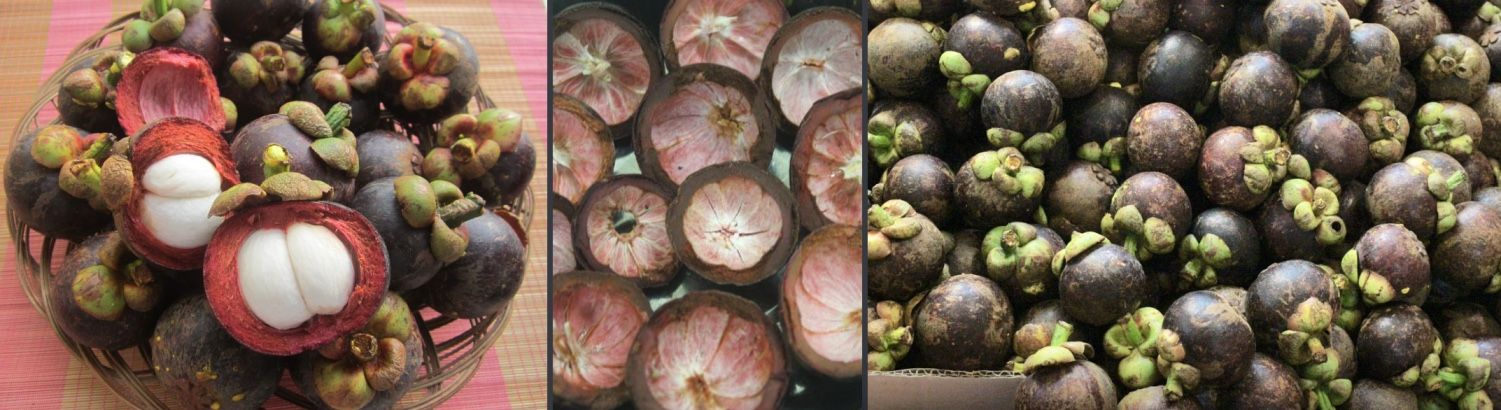
Mangosteen is the fruit Vietnamese people genuinely get excited about. Locals count down to season the way others wait for a holiday. From May to August, it floods markets in the south. The thick, wine-purple rind gives way to snow-white segments that are simultaneously tart and floral, with a texture closer to chilled custard than anything else.
How to eat it: Squeeze gently around the equator of the fruit until the rind cracks, then twist and pull the two halves apart. Each white pod lifts out cleanly. Larger segments may contain a seed, so bite carefully. Mangosteen also appears in goi mang cut, a southern-style savoury salad that is well worth ordering if you see it on a menu.
Best found: Southern Vietnam, May to August. Supermarkets stock it reliably; street vendors sell it by the kilogram.
Market price: 40,000 to 80,000 VND/kg (~$1.60 to $3.15 USD) at peak season. Prices climb toward 100,000 VND/kg at the start and end of season when supply is thin.
2. Dragon Fruit | Thanh Long
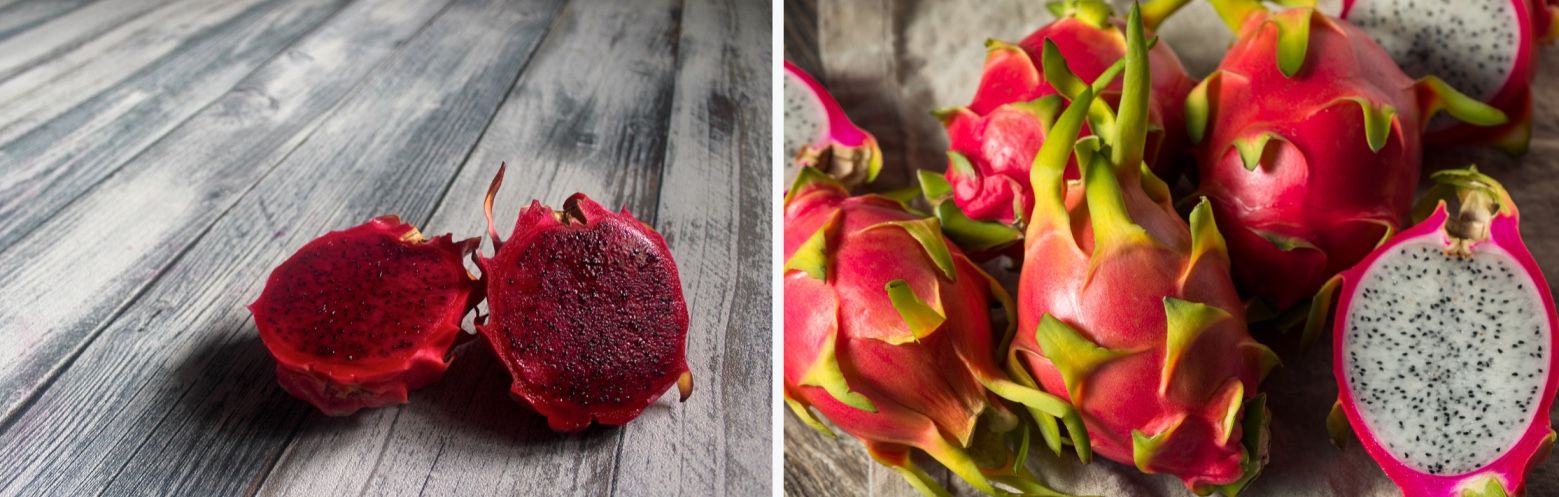
Dragon fruit is arguably Vietnam’s most photographed fruit. That vivid fuchsia skin with its flame-like green tips makes it a natural backdrop for every food photo. It’s grown extensively across the Mekong Delta and Binh Thuan province, and Vietnam is one of the world’s largest exporters.
The flesh comes in two varieties: white-fleshed (milder, more watery) and red or purple-fleshed (slightly sweeter, richer in antioxidants). Most street vendors carry the white variety. If you see the red flesh, try it. The flavour difference is noticeable.
How to eat it: Halve it lengthways, then scoop directly with a spoon or slice the flesh into cubes inside the skin. The seeds are edible. Vietnamese families often serve dragon fruit at the end of a meal as a palate cleanser, since its mild taste works well after heavier, spiced dishes.
Best found: Year-round across Vietnam; peak in summer.
Market price: 15,000 to 25,000 VND/kg (~$0.60 to $1.00 USD) for white flesh. Red-fleshed varieties run 20,000 to 30,000 VND/kg. One of the cheapest fruits on this list by weight.
3. Rambutan | Chom Chom
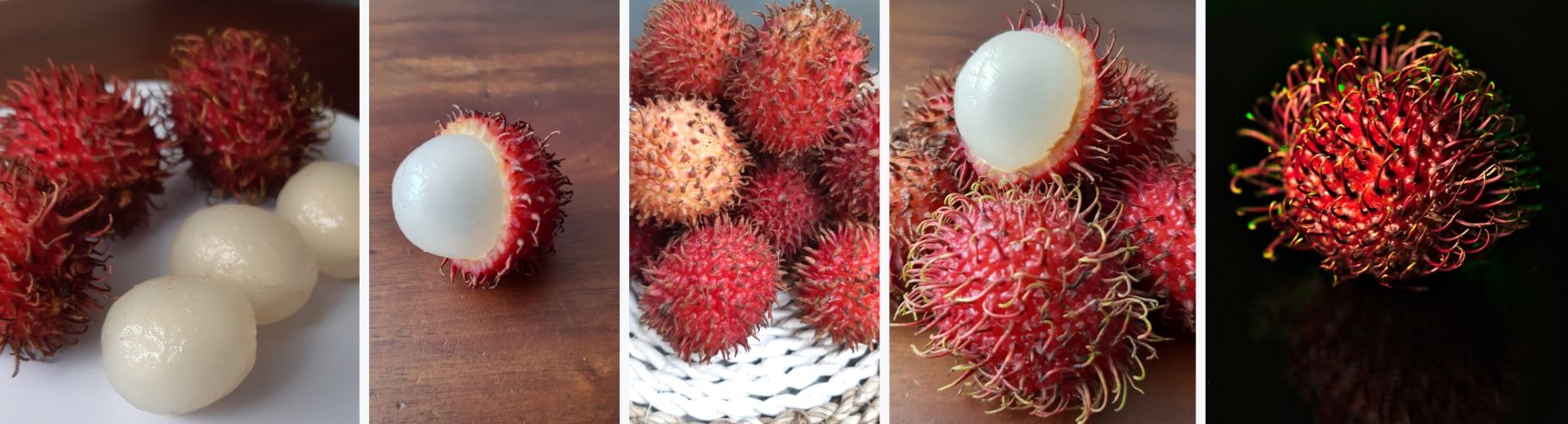
The name chom chom translates as “messy hair,” which is an accurate description of this bright red, hairy-looking fruit. Peel back the spiky exterior and you find white, translucent flesh that tastes like a cross between a grape and a lychee: mildly sweet, gently tart, and refreshingly juicy.
Rambutan is harvested twice a year, meaning you’ll find it reliably in both summer and winter. It’s a favourite at family gatherings and is almost always sold in large bunches. Buying a whole bunch for next to nothing and eating them on the spot is one of the best decisions you’ll make in Vietnam.
How to eat it: Pinch and twist the skin at the seam. If it doesn’t give easily, let the fruit ripen another day. The seed inside is inedible.
Best found: Mekong Delta region, widely available in markets June to August and December to January.
Market price: 15,000 to 20,000 VND/kg (~$0.60 to $0.80 USD) at peak season. Premium varieties like chom chom nhan (longan rambutan) reach 35,000 to 55,000 VND/kg. Buy a full bunch during peak season and it becomes one of the best-value snacks in the country.
4. Longan | Nhan Long
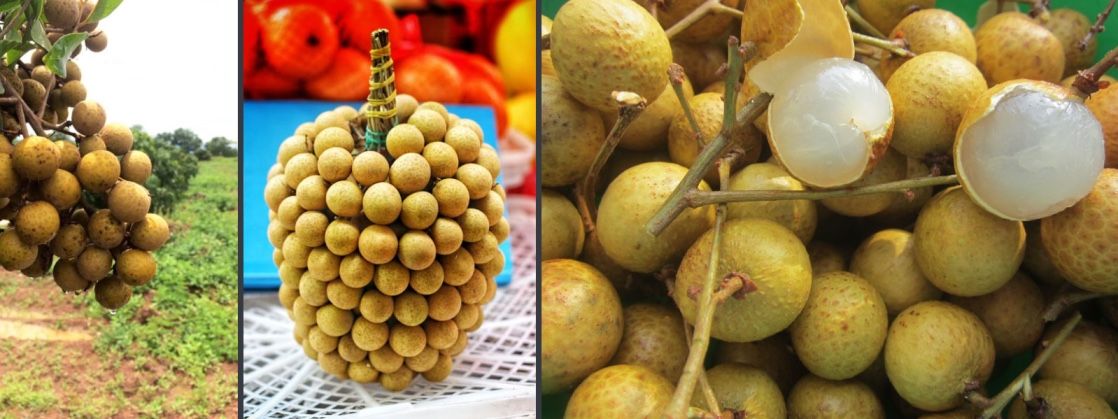
Longan translates literally as “dragon’s eye,” a name earned by the shiny black seed visible through its translucent flesh once peeled. It’s smaller and less dramatic than lychee, but many Vietnamese prefer it for its sweeter flavour and meatier texture.
In the north, longan from Hung Yen province is considered the gold standard, harvested in July and August, with a depth of sweetness that makes southern varieties taste almost mild by comparison.
How to eat it: Crack the thin brown shell with your thumbnail and peel it back. The flesh slides off the seed easily. Longan is eaten raw with tea, or cooked into che hat sen nhan long, a cold sweet soup with lotus seeds that is a staple summer dessert across the country.
Best found: Hung Yen (north), Mekong Delta (south), July to August peak.
Market price: 25,000 to 50,000 VND/kg (~$1.00 to $2.00 USD) at retail markets. Hung Yen longan at peak season runs 30,000 to 40,000 VND/kg and is worth every dong.
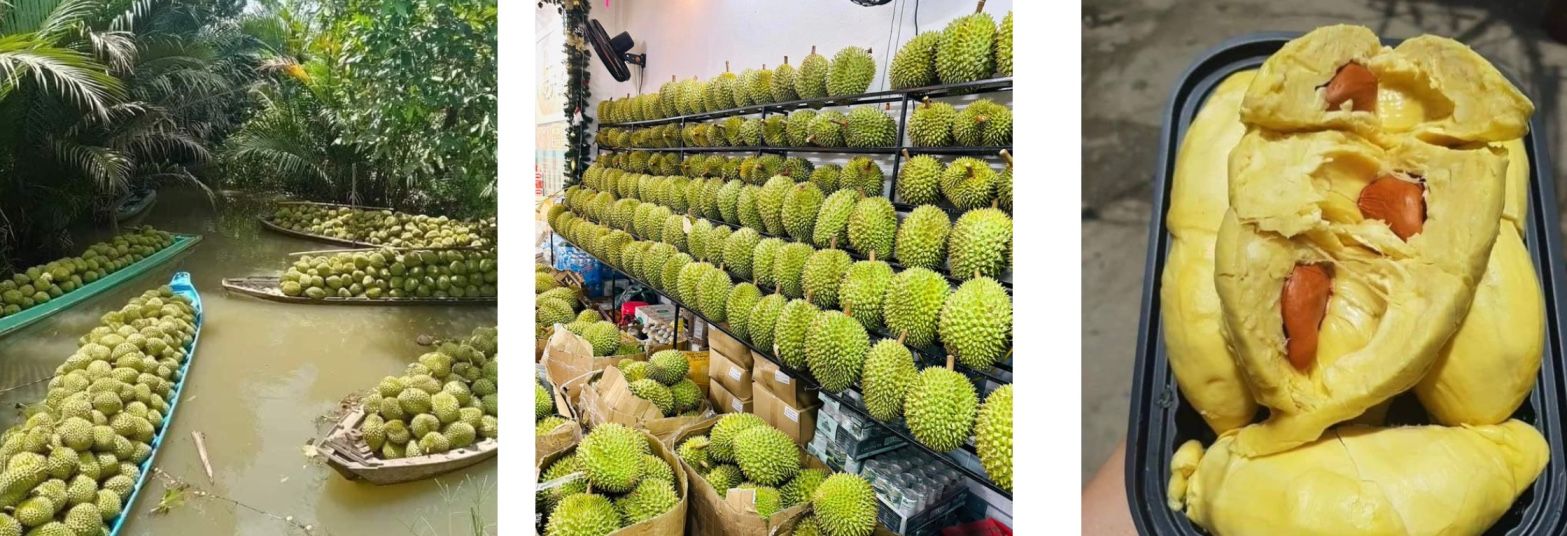
5. Durian | Sau Rieng
No Vietnam fruits list is complete without durian, the fruit that divides people into devoted fans and absolute refusers. The smell is polarising (it’s banned from public transport and hotel rooms across Southeast Asia), but those who get past it discover a flavour that’s rich, custardy, and genuinely addictive.
The texture is unlike anything else: thick, creamy flesh that melts on the tongue with a complex flavour somewhere between vanilla custard and caramelised onion. The Ri6 variety from the Mekong Delta is a local favourite, known for its dry, buttery texture and intense sweetness.
How to eat it: Don’t try to open a whole durian alone. Ask your vendor to cut it for you. If you’re not ready to eat it straight, try it in xoi sau rieng (sticky rice with durian), che Thai (mixed fruit dessert), or banh pia (a flaky pastry with durian filling popular in Soc Trang).
Best found: Mekong Delta, May to August. Also widely available in Can Tho and Ho Chi Minh City markets.
Market price: 120,000 to 150,000 VND/kg (~$4.70 to $5.90 USD) for Ri6 at local markets. Pricier than most Vietnamese fruits but still a fraction of what the same quality costs internationally. A single whole durian weighs 2 to 4 kilograms, so factor that into your budget.
6. Jackfruit | Mit
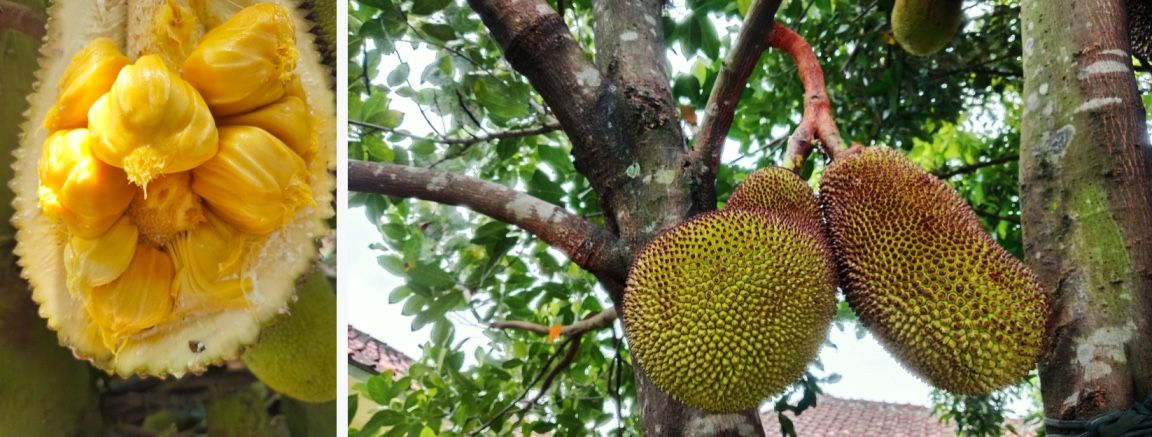
Jackfruit can grow to 30 kilograms, making it one of the largest fruits in the world by weight. The exterior is covered in pale green, bumpy ridges and looks similar to durian from a distance, but the inside is completely different: yellow, fibrous pods with a sweet, tropical flavour that some compare to a mix of banana and pineapple.
Ripe jackfruit is eaten as a sweet snack. Young, unripe jackfruit is used like a vegetable, pulled apart and cooked in savoury dishes. In Vietnam, you’ll find ripe jackfruit sold in segments at market stalls, vacuum-packed in supermarkets, and dried as a chip snack.
How to eat it: The latex inside a jackfruit sticks to everything. Vendors oil their hands and knives before cutting, so just ask them to prepare it. Eat the yellow pods directly and remove the white seed (which is edible when boiled). Find jackfruit in hoa qua dam, a beloved street dessert of mixed fruit in coconut cream and shaved ice.
Best found: Year-round across southern Vietnam.
Market price: 20,000 to 35,000 VND/kg (~$0.80 to $1.40 USD) for ripe jackfruit sold in pre-cut segments. Buying a section rather than a whole fruit is the practical move, since whole jackfruits are unwieldy and sold mainly to vendors.
7. Pomelo | Buoi

8. Star Fruit | Khe
Ripe star fruit is golden yellow, juicy, and refreshingly tart. Slice it crossways and every piece is a perfect five-pointed star. The trees bloom twice a year, making star fruit largely available year-round, with a stronger presence in the Mekong Delta.
Unripe star fruit is green and more aggressively sour. Vietnamese people eat it that way too, dipped in chili salt or fermented shrimp paste, a combination that tastes far better than it sounds. The skin is thin and waxy with no need to peel it.
How to eat it: Rinse and slice crossways. Star fruit appears in canh chua ca, the beloved Vietnamese sweet-and-sour fish soup, where its tartness balances the richness of the broth perfectly.
Best found: Mekong Delta, most of the year.
Market price: 10,000 to 20,000 VND/kg (~$0.40 to $0.80 USD). Star fruit is one of the most affordable items on this entire list. At that price, buying a kilogram and eating it on the spot with a pinch of chili salt is a very easy decision.

9. Lychee | Vai
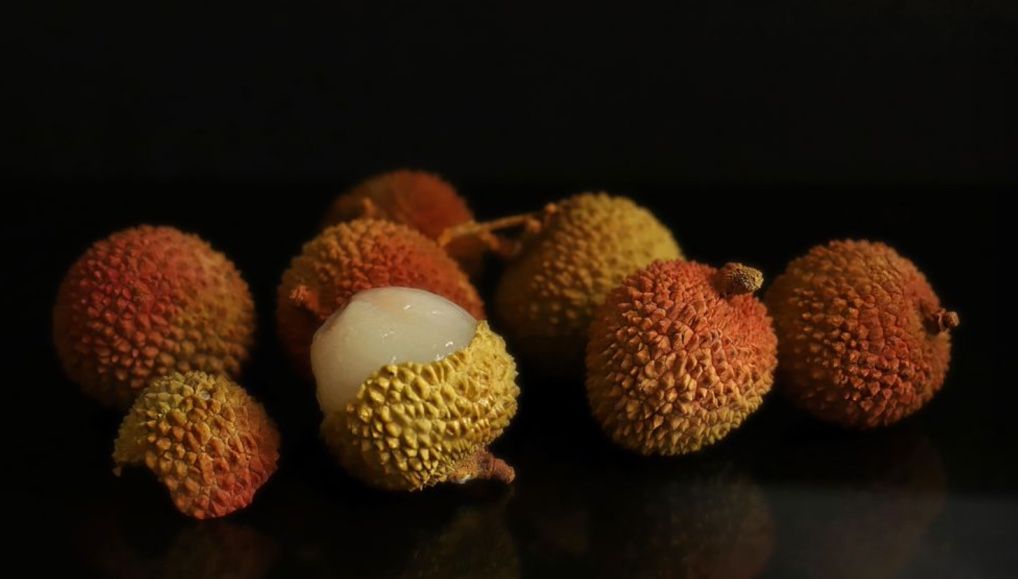
Lychee season in northern Vietnam is brief and intensely anticipated. From late May to July, Bac Giang and Hai Duong provinces erupt into lychee harvests. The roadsides are lined with vendors selling huge bags for almost nothing, and the fruit is at its absolute peak: sweet, fragrant, and so juicy it drips.
Outside of this window, lychee is available in preserved or canned form. But if your trip lands anywhere near June in the north, go out of your way for fresh lychee.
How to eat it: Pinch the dark red-pink skin between your fingers and peel it back. The white flesh underneath slides off the smooth brown seed easily. Eat it cold. Lychee also appears in nuoc ep vai (fresh lychee juice) and as a flavouring in Vietnamese tea and cocktails.
Best found: Bac Giang and Hai Duong provinces (north), late May to July only.
Market price: 30,000 to 50,000 VND/kg (~$1.20 to $2.00 USD) at retail during peak season. At the roadside in Bac Giang at harvest time, prices drop even lower. This is arguably the best value-to-flavour ratio of any fruit in Vietnam when bought in season at source.
10. Passionfruit | Chanh Leo
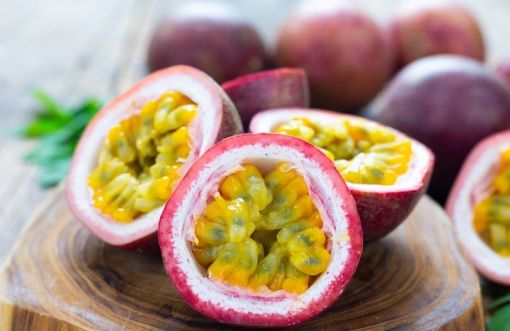
This is my favorite so far! Passionfruit grows across Vietnam’s Central Highlands, especially around Da Lat, and has become one of the most popular fruit flavours in Vietnamese cafes and dessert shops. The purple exterior hides a cavity full of orange-yellow seeds in a tart, fragrant pulp that smells like citrus and tropical flowers.
It’s notably sour eaten raw, which is exactly why Vietnamese people love combining it with yogurt and sweetened condensed milk in sua chua chanh leo, a layered dessert of yogurt, passionfruit pulp, and shaved ice that is one of the best things you can eat for breakfast in Hanoi.
How to eat it: Split the rind open with your hands or a knife. Scoop out the seeds and pulp with a spoon. Strain for juice or eat the seeds whole since they are fully edible and add texture.
Best found: Da Lat and Central Highlands year-round; widely available at cafes nationally.
Market price: 20,000 to 40,000 VND/kg (~$0.80 to $1.60 USD) for the common purple variety at local markets. A single passionfruit weighs around 60 to 80 grams, so a kilogram gives you roughly 12 to 15 fruits.
11. Guava | Oi
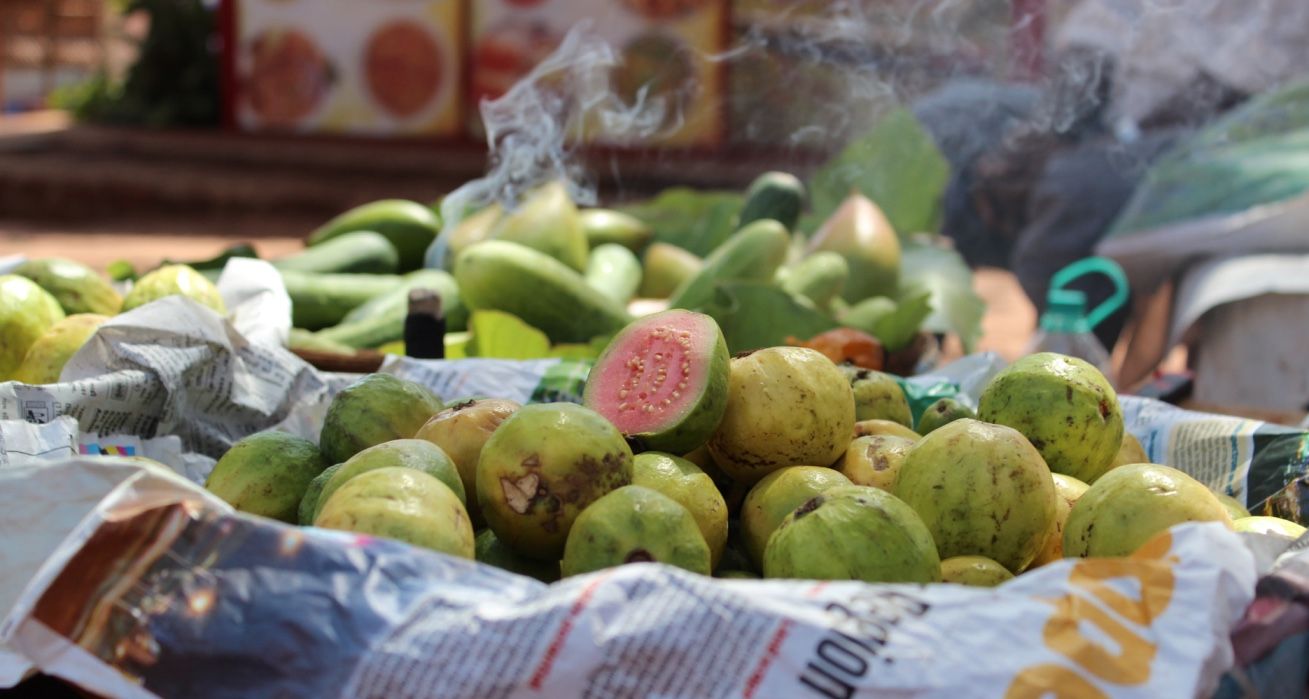
Guava in Vietnam is eaten at almost every stage of ripeness, which is unusual compared to most fruit cultures where waiting for full ripeness is expected. Green, crunchy guava is a favourite street snack, sold sliced into wedges and served with a small bag of chili salt. Ripe guava is softer, sweeter, and pink-fleshed.
The flavour profile is hard to categorise, somewhere between pear, strawberry, and a gentle floral note. The seeds are numerous but edible. Guava is also widely used in smoothies, juices, and dried fruit snacks.
How to eat it: Wash well since the skin is eaten. Eat it crunchy with chili salt for the full street-food experience, or let it ripen for a sweeter result.
Best found: Year-round nationally; widely available at market stalls and street carts.
Market price: 15,000 to 25,000 VND/kg (~$0.60 to $1.00 USD) for common varieties. Premium oi nu hoang (queen guava) runs higher at around 19,000 to 25,000 VND/kg. Pre-sliced street portions with chili salt cost 5,000 to 10,000 VND per serve.
12. Rose Apple | Qua Roi / Qua Man
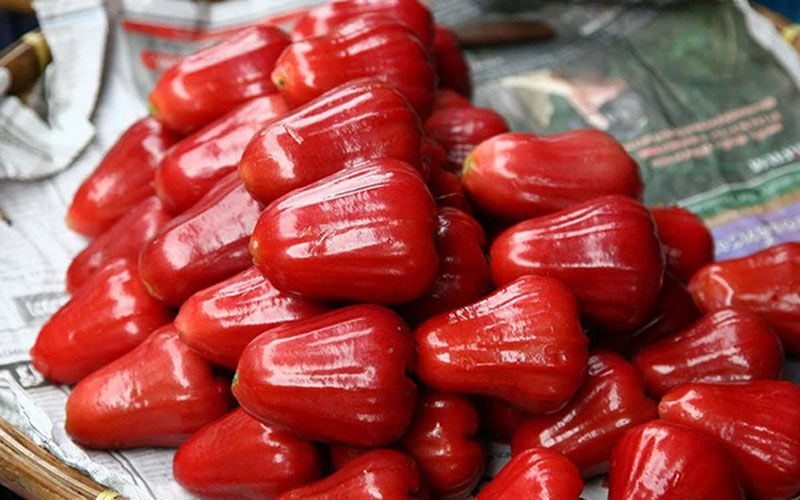
Bell-shaped and glossy red, rose apple is a fruit that looks more impressive than it tastes, and that’s not a criticism. It’s intentionally mild: crisp, watery, and faintly floral. That mildness makes it ideal in humid weather, and Vietnamese people eat it constantly as a thirst-quenching snack.
The north calls it qua roi while the south calls it qua man. Don’t confuse the southern name with plums since they are entirely different fruits.
How to eat it: Bite around the core, avoiding the base of the fruit. Alternatively, quarter it and eat it chilled. No peeling necessary.
Best found: Southern Vietnam, most of the year.
Market price: 45,000 to 65,000 VND/kg (~$2.00 to $4.00 USD). Rose apple is reliably cheap year-round and makes a good hydrating snack for minimal outlay.
13. Soursop | Mang Cau Xiem
Soursop is one of the more underrated exotic fruits in Vietnam. It’s a large, irregular oval covered in soft green spines. The white flesh inside is fibrous and creamy, with a flavour somewhere between pineapple and strawberry, with a sharp undertone that develops as it ripens.
In Vietnam, soursop is commonly blended into smoothies, pressed into juice, or frozen into a pulpy sorbet. It remains a traditional medicine ingredient across Southeast Asia.
How to eat it: Cut in half and scoop out the flesh. Remove the black seeds since they are inedible. Blend with coconut milk and condensed milk for one of Vietnam’s most refreshing fruit drinks.
Best found: Mekong Delta and southern Vietnam; available most of the year.
Market price: 20,000 to 35,000 VND/kg (~$0.80 to $1.40 USD) at local markets. Export-grade soursop reaches 40,000 to 50,000 VND/kg at specialist shops, but the market variety is perfectly good for eating.
14. Sapodilla | Hong Xiem
Sapodilla looks modest from the outside, a rough-skinned, egg-shaped brown fruit that gives no indication of what’s inside. But the flesh is one of the sweetest of any tropical fruit: dark orange-brown, extraordinarily dense, and grainy like a very ripe pear, with a flavour reminiscent of caramel and brown sugar.
How to eat it: Wash, peel the thin skin, slice in half, and remove the shiny black seeds. Eat directly or blend into smoothies. Sapodilla doesn’t travel well once ripe, so it rarely appears outside the region where it’s grown.
Best found: Southern Vietnam and Mekong Delta, October to March.
Market price: 20,000 to 35,000 VND/kg (~$0.80 to $1.40 USD). Easy to find at wet markets in the south; less common in Hanoi where prices edge higher.
15. Langsat | Bon Bon
Langsat (bon bon in Vietnamese) is a small, round fruit with thin pale skin that grows in large clusters like grapes. Unripe, it’s bracingly sour. Fully ripe, it becomes translucent, sweet, and juicy with a flavour that vaguely resembles a mild grapefruit without any bitterness. The variety grown in Quang Nam, Central Vietnam, is considered the finest.
How to eat it: Peel the skin with your fingers since it gives easily when ripe, then pop the segments into your mouth. Some segments have a small bitter seed to spit out.
Best found: Quang Nam province (central Vietnam), May to October.
Market price: 20,000 to 30,000 VND/kg (~$0.80 to $1.20 USD) in season. Outside of its growing region, langsat is harder to find and prices can rise.
Exotic Fruits in Vietnam Worth Seeking Out
If the mainstream fruits feel familiar, these are the ones worth actively hunting down at local markets.
16. Star Apple | Vu Sua
The name translates to “mother’s milk,” connected to an old Vietnamese folktale. It’s a spherical fruit similar in size to an orange, with smooth skin in shades of dark violet or green. The flesh is white and milky with a gentle, almost candy-like sweetness. Pressing and rolling the fruit before cutting releases more juice. Grown in Can Tho and Tien Giang in the Mekong Delta, available November through April.
Market price: 50,000 to 120,000 VND/kg (~$2.00 to $4.70 USD). The premium Vo Sua Lo Ren variety from Tien Giang reaches the higher end of that range. Standard market varieties are a much gentler buy.
17. Custard Apple | Na
Shaped like a lumpy green pinecone, custard apple has soft, creamy white flesh with a flavour somewhere between banana and vanilla. The skin pulls apart in segments. It’s high in protein for a fruit, appears on Tet altars as part of the traditional five-fruit tray, and is eaten by simply pulling it open with your hands.
Market price: 35,000 to 60,000 VND/kg (~$1.40 to $2.40 USD) for standard varieties. Na Chi Lang from Lang Son province, considered the finest, can fetch 55,000 to 80,000 VND/kg at retail.
18. Ambarella | Coc
A green, oval fruit with thick, crunchy pulp and a pit in the centre. The flavour is sharp and tangy, and it’s almost always eaten with salt and chili rather than ripe and sweet. Street vendors in Hanoi and Ho Chi Minh City sell it pre-sliced in small bags. It tastes nothing like anything found in Western grocery stores.
Market price: 10,000 to 20,000 VND/kg (~$0.40 to $0.80 USD). One of the cheapest fruits you’ll encounter in Vietnam. Street-prepared portions with chili salt typically cost 5,000 to 10,000 VND, making it the ultimate low-budget snack.
19. Young Coconut | Dua Tuoi
Young coconut drunk straight from the shell through a straw is everywhere across Vietnam. The water is naturally sweet and slightly grassy, and the flesh of young coconuts is soft and gelatinous. In the Mekong Delta, coconut features in nearly every dessert, from keo dua (coconut candy) to the broth base of hot pots.
Market price: 15,000 to 20,000 VND per coconut (~$0.60 to $0.80 USD) at street stalls and markets. In tourist areas, expect to pay 20,000 to 30,000 VND. Still cheap by any measure.
Vietnam Fruits and Vegetables: Where the Line Disappears
In Vietnamese cooking, the boundary between fruit and vegetable is regularly ignored. Several items most Westerners think of as vegetables are used as fruits, and vice versa.
Green mango (xoai xanh) is eaten as a vegetable, shredded into salads (goi xoai), pickled, or served with fermented shrimp paste. Unripe papaya is shredded into a tangy salad similar to Thailand’s som tam. Young jackfruit is pulled apart and slow-cooked in savoury braised dishes. Star fruit and green guava are served with savoury dipping sauces the way cucumbers might be in other countries.
This crossover is especially visible in Vietnamese wet markets, where you’ll find young banana flowers, unripe tamarind pods, and raw lotus seeds all sitting alongside recognised vegetables. For visitors used to supermarkets with clearly separated produce sections, Vietnamese markets are a genuine revelation.
Seasonal Fruits in Vietnam: A Month-by-Month Calendar
Vietnam’s long north-to-south geography means fruit seasons shift depending on region. This calendar reflects broad national availability, with notes on regional peaks.
| Month | In-Season Fruits in Vietnam |
|---|---|
| January | Star Apple, Sapodilla, Pomelo, Custard Apple |
| February | Star Apple, Pomelo, Rose Apple |
| March | Watermelon, Rose Apple, Papaya |
| April | Watermelon, Star Fruit, Guava |
| May | Mangosteen, Lychee (North), Rambutan, Langsat |
| June | Lychee (North peak), Mango, Rambutan, Durian begins |
| July | Longan, Mango (peak), Durian (peak), Mangosteen |
| August | Longan, Rambutan, Mangosteen, Durian |
| September | Longan, Pomelo, Dragon Fruit |
| October | Pomelo (peak), Dragon Fruit, Langsat ends |
| November | Star Apple begins, Pomelo, Custard Apple |
| December | Star Apple, Sapodilla, Pomelo, Rambutan |
Durian and mangosteen are the prestige fruits of summer. If your trip falls between June and August, both should be on your must-eat list. Lychee season in the north runs from late May to early July and is so short that many northern Vietnamese plan their calendar around it deliberately.
Vietnam Fruits List With Pictures: Telling Them Apart at the Market
For first-time visitors navigating a Vietnamese market, identifying fruit by sight can be genuinely confusing. Many tropical fruits look similar from the outside. Here’s a quick visual guide to the most commonly mistaken pairs.
Durian vs Jackfruit
Both are large, greenish-yellow, and covered in a textured exterior. Durian’s spikes are sharp and pointed; jackfruit’s surface is bumpy and rounded. Durian smells unmistakably pungent from a distance. Jackfruit has a faint sweet smell when ripe.
Rambutan vs Lychee
Both are small, red, and round. Rambutan has long, soft, hairy extensions all over its skin. Lychee’s skin is smooth with a slightly bumpy texture. Both peel easily by hand.
Longan vs Lychee
Longan is smaller, with a smooth tan-brown shell. Lychee is slightly larger with a textured pink-red shell. Longan grows in dense branches; lychee grows on individual stems.
Soursop vs Custard Apple
Soursop is larger, with long soft spines arranged across a dark green skin. Custard apple is smaller and rounder, with a pattern of overlapping scalloped segments. Soursop flesh is fibrous; custard apple flesh is soft and creamy.
At larger markets like Ben Thanh in Ho Chi Minh City, Dong Xuan in Hanoi, and the floating markets along the Mekong Delta, vendors are accustomed to curious visitors and will often let you taste before you buy.
Practical Tips for Buying Fruit in Vietnam
Buy by weight, not by piece. Most fruit at Vietnamese markets is priced per kilogram (mot ky). Point to what you want, the vendor weighs it, and a small calculator appears showing the price.
Eat what’s local and in season. Fruit shipped long distances or stored cold loses flavour quickly. Buying dragon fruit in Binh Thuan or longan in Hung Yen during peak season is a completely different experience from buying the same fruit off-season in a city supermarket.
Try fruit with condiments. Salt, chili, and lime are the standard accompaniments for sour or unripe fruit across Vietnam. The combination enhances sweetness, cuts through sourness, and turns a simple piece of fruit into a full sensory snack.
Start with hoa qua dam. This is a bowl of mixed seasonal fruits, shaved ice, and coconut cream that vendors assemble to order. It’s found everywhere, costs almost nothing, and gives you a sample of four or five fruits at once. It’s the single best introduction to Vietnam’s fruit culture for any first-time visitor.
Vietnam fruits are best discovered slowly, one market stall at a time, one season at a time. The gap between what appears in a supermarket back home and what you’ll find piled fresh at a Mekong Delta market is something no photograph fully prepares you for.
The Best Way to Find These Fruits? Get Off the Main Roads
Markets in city centres are convenient, but the real fruit experience in Vietnam happens in smaller towns, roadside villages, and provincial markets where produce comes directly from nearby orchards. A longan seller in Hung Yen, a durian stall on the outskirts of Can Tho, a langsat vendor in Quang Nam — these are the encounters that stay with you, and they’re almost impossible to reach by bus or tourist van.
That’s exactly why motorbike tours are the single best way to eat your way through the country’s fruit regions. Riding through the Mekong Delta, you stop when something looks good. You pull over at a roadside stall stacked with mangosteens in July. You follow a hand-painted sign down a dirt track to an orchard that doesn’t appear on any map. You buy a bag of lychee from someone who picked it that morning.
If you’re planning a trip and want to explore Vietnam’s markets, orchards, and backroads properly, motorbike tours in Vietnam give you the flexibility no other form of transport does. Whether you join a guided group tour through the delta or rent your own bike and follow the fruit calendar north to south, two wheels is how Vietnam is best eaten.