Off-Road Motorbike Tours in Vietnam: Dirt Bike Rides Through the Northern Highlands

Northern Vietnam has a network of dirt tracks, forest paths, single trail, and river valley routes that the sealed road system does not reach and that most motorcycle tourists never find.

These are the roads connecting highland villages to their fields, linking ethnic minority communities across mountain ridges, and following river systems through gorges that sealed road engineers bypassed entirely. Riding them requires the right bike, a guide who knows the surface conditions on a given day, and a rider who is comfortable when the tarmac ends and the terrain takes over. The off-road tours cover this network systematically, dirt by day, village overnight stops, and riding that covers ground no tour bus or rental scooter will ever reach.

Why Northern Vietnam for Off-Road Riding

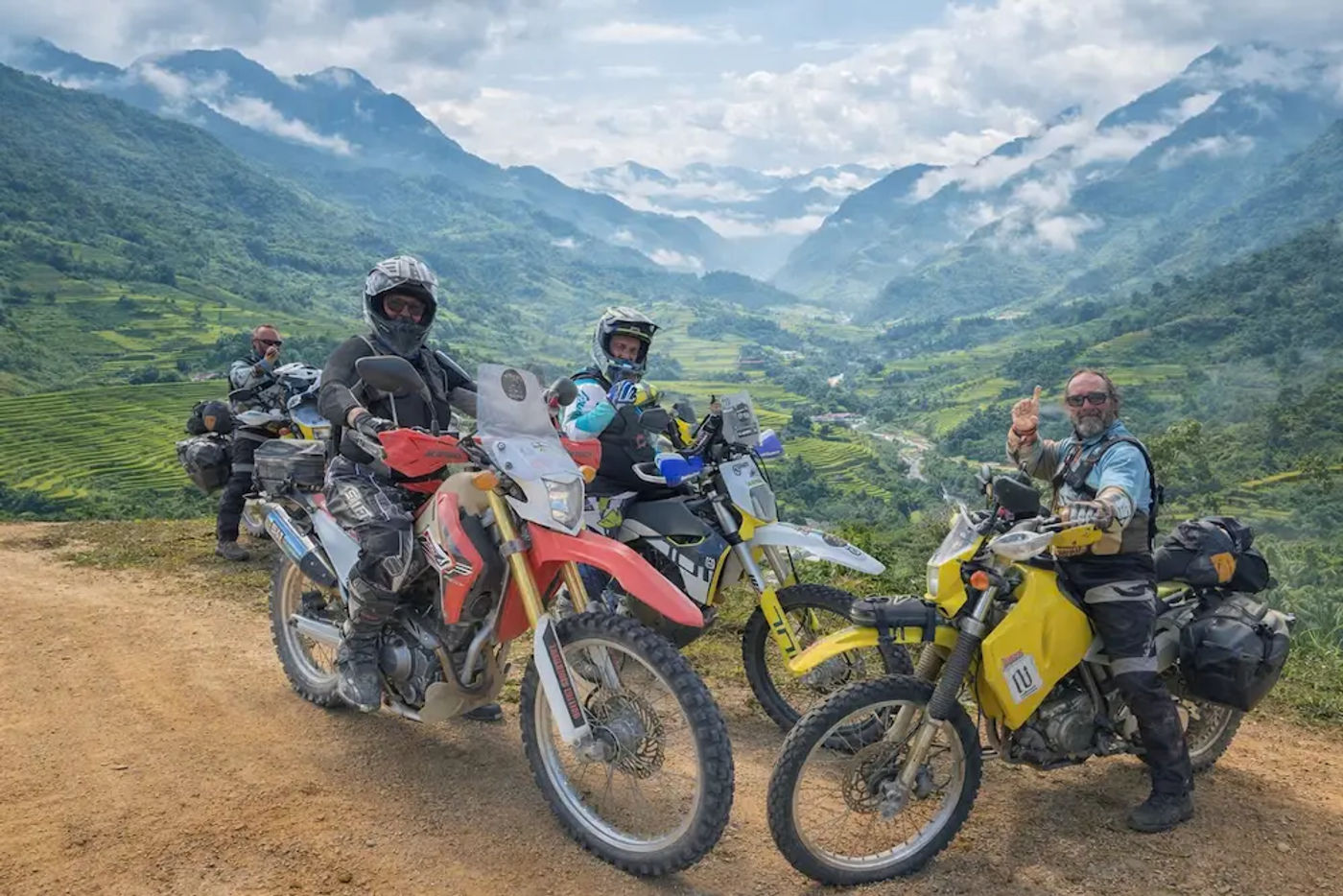
The geography of northern Vietnam produces off-road riding conditions that are difficult to find concentrated in this way anywhere else in Southeast Asia. The Hoang Lien Son mountain range, the Truong Son corridor, and the border highlands of Ha Giang, Cao Bang, and Lai Chau province create a terrain of steep valleys, forested ridges, and river systems that have been connected by tracks rather than roads for most of their history. Sealed roads arrived late to the most remote parts of this region and many communities still rely on dirt tracks as their primary connection to the outside world.

The result for off-road riders is a network of tracks that exist for practical reasons rather than recreational ones. These are not purpose-built trail systems. They are functional roads that happen to be excellent riding. The villages at the end of them are not tourist destinations.

The people living in them are farmers, traders, and highland communities going about daily life. Riding through this landscape under a guide who has relationships with these communities is a different experience from any trail park or guided offroad centre.

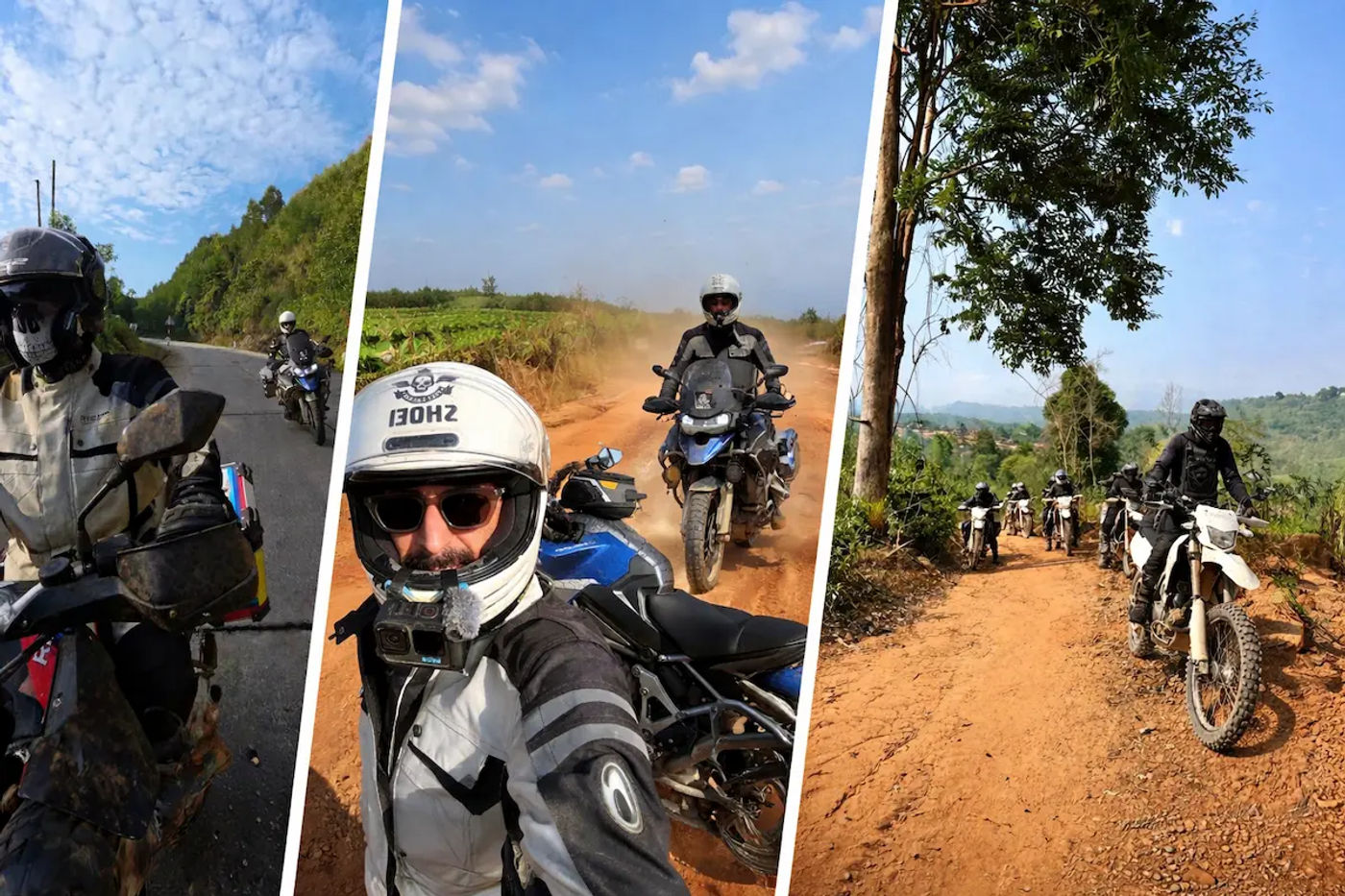
The diversity of surface is also significant. Single morning can cover hard-packed laterite, loose stone on a mountain climb, a concrete ford river crossing, root-covered forest trail, and compacted earth through village agricultural land. No two days on the off-road circuit cover the same type of terrain and the riding requires constant reading of the surface rather than a settled cruising rhythm.

The Off-Road Terrain: What You Will Actually Ride

Laterite Dirt Roads

Laterite is the dominant surface on northern Vietnam’s secondary road network. Red-brown compacted earth that drains well in dry conditions and turns to a slippery clay surface after rain. In dry season laterite roads carry firm traction and are the most consistently rideable offroad surface on the circuit. After overnight rain the top layer loosens and the rear wheel breaks traction on climbs and on cambers.

The guide checks surface conditions each morning and adjusts the day’s route based on what rained overnight and where. Laterite dominates the lower elevation sections of the off-road circuit and the inter-village connecting roads through the highland valleys.

Mountain Single Trail

Above the laterite road network a series of single trail sections connect the highest villages to the ridgeline paths above them. These are narrow paths, motorcycle-width with no margin, running through secondary forest and across exposed ridge sections where the trail surface is compacted earth over rock. Technical in the sense that line selection matters and speed is kept low throughout.

The guide rides first, selects the line, and the group follows one at a time on sections where passing is not possible. Single trail sections are found primarily in the Ha Giang backcountry, the Ta Xua approaches in Son La province, and the Nam Ha buffer zone tracks in Luang Namtha.

River Crossings

River crossings on the northern Vietnam off-road circuit range from concrete low-water fords to natural stone-bottom river shallows. Concrete fords are straightforward in dry season, a flat concrete pad sits at the river level and the crossing is a matter of maintaining momentum through the water without stopping. In wet season fords submerge and the water depth above them requires a walk-through assessment before committing.

Natural crossings require more judgment, the guide walks the crossing first, identifies the stone bottom line, and leads the group through one bike at a time. Riders who have never crossed a river on a motorcycle adapt quickly once they see the technique. The guide demonstrates on the first crossing of the tour and briefs the group on what to do if a bike stalls in the water.

Forest Trail

The forest track sections on the off-road circuit run through primary and secondary growth at various elevations. Surface is compacted earth with root sections, occasional rock exposure on steeper sections, and leaf cover on shaded sections that reduces traction without being visible from a distance. The light on forest trail sections changes the riding, dappled shade and sudden bright sections require eye adjustment and a slightly reduced pace.

Tree roots crossing the trail perpendicular to the riding direction are the primary technical challenge on forest sections. Hitting them at the wrong angle on a loaded bike produces a front wheel deflection that surprises riders expecting a consistent surface.

Stone Track

The oldest roads in the northern highlands are stone tracks, hand-laid paths built over centuries for foot traffic and pack animals that predate any motor vehicle by hundreds of years. Some of these have been incorporated into the motorcycle route network because they connect villages that no other path reaches. Stone track riding requires low speed, careful line selection through the gaps between surface stones, and confidence managing the bike at walking pace on technical sections.

These are some of the most interesting sections on the circuit from a riding technique perspective and some of the most historically significant in terms of where they go and who uses them.

Highland Village & Rice field Tracks

Between villages the rice field tracks connecting fields to settlements carry a surface defined by whatever the surrounding soil produces. In the high corn growing areas of Ha Giang the tracks run through loose dry soil over rock.

In the terraced rice areas around Mu Cang Chai the tracks between terraces are narrow, often wet from irrigation, and bordered on both sides by the terrace walls. In the valley farming areas of the northwest the inter-field tracks are compacted earth that widens to allow oxcart traffic and narrows again where the field boundaries close in.

These are not challenging riding in terms of technical difficulty. They require patience, low speed, and awareness of what is happening on both sides of the track.

Off-Road Routes and Destinations

The Ha Giang plateau carries the most concentrated network of off-road tracks accessible from a single base in northern Vietnam. Above the sealed loop road that most riders know, a series of dirt tracks and stone paths connect Hmong and Lo Lo villages on the high karst at elevations between 1,400 and 1,700 meters. The tracks north of Dong Van toward the Chinese border settlements of Ma Le and Xin Cai are dirt throughout and carry almost no motorized traffic.

The Sung La valley track drops off the sealed road between Dong Van and Ma Pi Leng into a sheltered karst valley accessible only by the dirt path that runs its full length. The ridge tracks above Yen Minh toward Na Khe and Sung Tra climb through Hmong agricultural land on loose stone and compacted earth. None of these sections are visible from the sealed loop. All of them are guided.

  • Terrain: laterite, stone track, compacted earth
  • Skill level: intermediate
  • Best combined with: Ha Giang Loop guided tour, 6 or 7-day variant

Cao Bang Border Highlands Off-Road

The district roads in Cao Bang province northeast of the city carry the quietest and most consistently interesting offroad riding in the northeast. The Quang Uyen district backroads run through Tay and Nung farming land on compacted laterite connecting the border village communities to the market at Quang Uyen town.

The tracks north of Trung Khanh toward the Ban Gioc border area narrow progressively from provincial road to village path as they approach the Chinese border zone. The road from Cao Bang through Nguyen Binh to That Khe via the Phia Oac mountain pass carries a forest section above 600 meters where the track narrows through primary growth and the surface shifts between sealed and compacted earth without consistent pattern.

The Phia Oac section is the highlight of the northeast off-road riding and consistently the section riders mention first when describing the Cao Bang circuit.

  • Terrain: laterite, compacted earth, forest track, stone border path
  • Skill level: beginner to intermediate
  • Best combined with: Northeast Vietnam Motorbike Tour

Ba Be National Park Trail Network

The internal track network of Ba Be National Park in Bac Kan province connects the lakeshore communities to the agricultural land in the park buffer zone on paths that park management maintains for local use rather than tourist access. The track from Pac Ngoi village north along the lakeshore toward the Bun Lom fishing settlement is laterite with tree cover and the lake visible through the forest on the eastern side.

The buffer zone tracks east of the main park road climb into secondary growth on compacted earth that firms up quickly after rain due to the forest canopy above. These are the most accessible off-road sections for riders new to dirt riding in Vietnam, low gradient, manageable surface, no technical challenge beyond reading the path and maintaining appropriate speed through the forest sections.

  • Terrain: laterite, compacted earth, forest path
  • Skill level: beginner to intermediate
  • Best combined with: Northeast loop

Central Vietnam Off-Road: Phong Nha and the Trail Sections

The forest tracks north and west of Phong Nha in Quang Binh province follow sections of the original Ho Chi Minh Trail alignment through the Phong Nha-Ke Bang National Park buffer zone. These are not park trails — they are the roads and paths that logging, farming, and military logistics have used since the trail was active and that persist because the communities in the buffer zone still use them. The surface is compacted earth over karst with sections of original stone alignment visible in places.

The forest closes in on both sides and the light drops significantly under the canopy. Bomb crater depressions are visible from the track in sections above the Mu Gia Pass approach. This is the most historically loaded off-road riding environment on the entire tour range and the guide’s knowledge of what you are riding through is an essential part of what makes these sections significant.

Sapa Valley Dirt Tracks: Muong Hoa & Beyond

Below Sapa town the Muong Hoa valley carries a series of agricultural tracks through the rice terrace landscape that surrounds the valley floor. The tracks between the terrace levels follow the irrigation channels on compacted earth paths that are wide enough for a motorcycle in dry conditions and narrower where terrace walls have eroded toward the path edge.

The villages of Ta Van, Giang Ta Chai, and Y Linh Ho are connected by these tracks and accessible by guided motorcycle where the width allows. Beyond the valley the routes climbing toward the Fansipan foothills on dirt tracks through Black Hmong agricultural land are steeper, looser on the surface, and require more offroad confidence. These upper sections are covered on the advanced variant of the Sapa off-road day.

  • Terrain: compacted earth, terrace irrigation path, loose highland dirt
  • Skill level: beginner in the valley, intermediate to advanced on the upper sections
  • Best combined with: Northwest Vietnam or North Vietnam Circuit

Skill Levels Explained for Off-Road Riding

Off-road riding requires a different skill set from road touring and the gap between beginner and advanced is more significant on dirt than it is on sealed road. Understanding where you sit on this scale before booking avoids disappointment on the trail and allows us to match the route to your actual capability.

Beginner Off-Road

You have ridden a manual motorcycle on sealed roads. You may have ridden on gravel or basic unpaved surfaces but you have not ridden technical dirt with loaded bikes, river crossings, or significant elevation change on loose surfaces. At beginner level we route the off-road days on lower gradient laterite tracks and the Ba Be and Quang Uyen sections. The guide sets a slow pace and provides technique instruction on the specific challenges of each section before riding them.

Beginner riders build genuine offroad capability across a multi-day tour in a way that a single off-road day at home cannot replicate.

Intermediate Off-Road

You have offroad riding experience. You are comfortable on loose surfaces, have ridden on loaded bikes on unpaved roads, and can manage a drop and recovery without assistance.

At intermediate level all sections of the off-road circuit are accessible including Ta Xua, the Phia Oac forest track, and the Mu Cang Chai terrace paths. The guide leads and sets pace but does not slow the group for the intermediate sections.

Advanced Off-Road

You ride offroad regularly. You are comfortable on steep loose climbs, technical descents, river crossings without concrete fords, and single trail with limited recovery space. At advanced level the guide opens the upper sections of the Ha Giang backcountry tracks, the full Ta Xua ridge approach, and the Phong Nha trail sections that are not accessible to intermediate riders. Advanced riders can also request custom technical sections in the northwest and northeast highland areas that are not on the standard circuit.

The bikes

Off-road riding in northern Vietnam requires bikes suited to the terrain. Road bikes and scooters are not appropriate and are not offered on these tours.

Honda CRF 250L is the primary beginner and intermediate off-road bike on the circuit. Light at 146 kilograms, with 230mm of ground clearance and a low seat height that suits a wide range of rider builds. The CRF 250L handles all beginner and intermediate sections on the off-road circuit with room to spare and is the easiest bike in the fleet to pick up after a drop. Engine power is sufficient for the gradients involved and the mechanical simplicity means roadside repairs are fast when needed.

Honda CRF 300L steps up from the 250 with a larger engine and slightly increased weight at 152 kilograms. Ground clearance and seat height are comparable. The additional power makes a difference on sustained steep climbs at altitude and on the longer laterite sections where the 250 runs at higher revs to maintain pace. The CRF 300L is the guide’s recommendation for intermediate riders who are comfortable on the 250 and want more capability on the technical sections.

Both CRF variants carry full skid plates, hand guards, and reinforced luggage systems for multi-day off-road use. All bikes carry a full toolkit and first aid kit. The sweep rider carries spare levers, cables, air filters, spark plugs, tubes, and a tire repair kit on every off-road tour.

What to Expect on a Multi-Day Off-Road Tour

Daily Structure

Off-road days are shorter in distance than sealed road days. Covering 80 to 120 kilometers of technical dirt track takes as long as 200 kilometers of sealed mountain road. The guide builds the daily schedule around the terrain rather than the distance. Morning sections cover the most technical riding when energy and concentration are highest. Afternoon sections are generally lower gradient and less demanding. The guide calls rest stops based on group condition rather than a fixed schedule.

Overnight Stops

Off-road circuits overnight in guesthouses in the larger towns on the route and in village homestays in the more remote sections. Homestay accommodation on these tours is basic, a room in a family home, shared outdoor bathroom, meals prepared by the host family using local produce.

This is not a hardship element of the tour. It is the most direct way to engage with the communities the route passes through. The guide briefs riders on homestay etiquette before the first village overnight.

Bike Drops and Recovery

Dropping a bike on an off-road tour is not an unusual event. It happens to experienced riders on unfamiliar terrain and it happens to beginners on sections that look straightforward. The guide and sweep rider are positioned to assist with recovery on any section of the route. No rider is expected to recover a dropped bike alone on a technical section.

The sweep rider carries the tools and parts to handle the most common mechanical issues that result from a drop — bent levers, broken mirrors, loose luggage systems. Serious mechanical failures are handled by contacting the nearest service point via the guide’s communication equipment.

Physical Demands

Off-road riding is physically more demanding than sealed road touring for equivalent distances and duration. The body works continuously to manage the bike on variable surfaces and the concentration required on technical sections produces fatigue that road riding does not.

Riders who arrive for a 7-day off-road circuit in poor physical condition will find the later days significantly harder than the first. General fitness, core strength, and the ability to stand on the pegs for extended sections are the relevant physical requirements.

No specific training program is prescribed but riders who do any regular physical activity will find the off-road circuit manageable. Riders who live a predominantly sedentary lifestyle should consider a shorter off-road circuit first.

What Is Included

Included: lead guide throughout, sweep rider with full parts kit, Honda CRF 250L or CRF 300L rental for the full tour duration, fuel on all riding days, accommodation throughout including village homestays, breakfast daily, and all national park and nature reserve entry fees where applicable.

Not included: international flights, Vietnam visa, personal travel insurance with motorcycle coverage, lunches, dinners, and personal expenses. Travel insurance covering motorcycle riding in Vietnam with off-road activity is mandatory.

Confirm that your policy specifically covers off-road motorcycle riding before departure, standard travel insurance often excludes it.

Best Time for Off-Road Riding in Northern Vietnam

Dry season is the reliable window for off-road touring in northern Vietnam. October through April gives the most consistently rideable dirt conditions across the circuit.

October and November are the strongest months. The summer rains have finished, the laterite roads have dried and firmed up, and the highland tracks are at their most stable. Temperatures at altitude are comfortable and the light on the high sections in October is the best of the year.

December through February brings cold to the higher sections. Ta Xua above 2,000 meters and the Ha Giang backcountry tracks above 1,500 meters are cold in the mornings and require proper riding gear for the exposed ridge sections. The tracks are dry and firm and the cold is manageable with the right preparation.

March and April are excellent months. Warming temperatures, dry tracks, and the highland vegetation at its greenest before the first rains arrive in May.
May through September is the wet season. Laterite roads in wet season require significantly more skill to ride safely. Ta Xua is not recommended for any rider below advanced level in wet season. The Phong Nha trail sections become muddy and some sections are impassable.

The Ba Be and Quang Uyen sections are more manageable in light rain but sustained wet weather affects every off-road section on the circuit. We run off-road tours in wet season for advanced riders who specifically request it with full understanding of the conditions.

Frequently Asked Questions

Do I need off-road riding experience to join these tours?

Prior off-road experience is not mandatory for the beginner sections of the circuit. Riders who are new to dirt but confident on a manual motorcycle can join the Ba Be, Quang Uyen, and lower gradient laterite sections with full guide support. The guide provides technique briefings specific to each surface type before riding them. Riders without any off-road experience should not attempt the Ta Xua section, the Ha Giang backcountry tracks, or the Phong Nha trail on their first off-road tour.

What happens if I drop the bike on a technical section?

The sweep rider is positioned to assist with recovery on every section of the route. Dropping a bike is handled practically rather than dramatically, the guide and sweep rider help recover the bike, assess any damage, carry out roadside repairs if needed, and the group continues.

Riders who are concerned about damaging the rental bike should note that the tour price includes basic damage cover for drops that occur on the guided sections. The specific damage cover terms are outlined in the booking documentation.

Can I choose which off-road sections to ride and which to skip?

Yes. The guide assesses each rider’s capability and comfort at the start of the tour and again before each technical section. Riders who want to skip a specific section ride around it on the sealed road alternative while the guide takes the rest of the group through the dirt section. This happens without disrupting the tour schedule because the guide knows the timing of every section and builds buffer into the day for exactly this situation.

Are the river crossings dangerous?

The river crossings on the standard off-road circuit are low water fords and shallow stone crossings that the guide walks through before the group commits.

They are not dangerous for a rider who follows the guide’s line and technique instruction. The primary risk on a river crossing is stalling the bike in the water, which the guide’s technique briefing specifically addresses.

Riders who stall in a crossing receive immediate assistance from the sweep rider. Deep or fast-moving crossings that present genuine risk are avoided or bypassed on an alternative route. The guide makes this call on the day based on current water level.

What is the maximum group size on off-road tours?

5 riders maximum on off-road tours. Smaller than the on-road maximum because off-road sections require more guide attention per rider and the single trail and river crossing sections cannot accommodate larger groups efficiently. Private off-road tours for one to three riders are available and give the guide more flexibility to customize the technical sections to the group’s specific capability.

Can I combine off-road riding with an on-road tour?

Yes and this is a common request. Riders who want predominantly sealed road touring with specific off-road days added can discuss this at booking. The Ha Giang Loop combines naturally with the Ha Giang backcountry off-road sections. The Northwest Vietnam tour combines with the Ta Xua and Mu Cang Chai off-road additions. The Ho Chi Minh Trail tour combines with the Phong Nha trail sections. Contact us with your preferred balance of on-road and off-road and we will structure the itinerary accordingly.

Book an Off-Road Motorbike Tour in Vietnam

Group departures run October through April for all off-road circuits. Private tours available year-round. Maximum 6 riders per group. To check availability, discuss skill level requirements for a specific section, or request a custom off-road itinerary combining multiple circuit areas, contact us directly.

Scroll to Top