
North Vietnam Circuit: Join the Complete Motorbike Loop
The North Vietnam Circuit is the most complete motorcycle route in the country’s northern highlands. Where most tours pick one region and turn back, this loop strings together the far northeast and the northwest into a single continuous ride — Ha Giang’s karst plateau, Cao Bang’s waterfall country, Ba Be Lake, the Son La highlands, and the mountain corridor back to Hanoi. The full loop covers between 700 and 900 kilometers depending on the variant you choose. Seven to ten days on the road, with daily distances that leave time to actually look around.
What Makes This Route Different from the Ha Giang Loop
The Ha Giang Loop is one section of northern Vietnam. The North Vietnam Circuit uses Ha Giang as a starting point and keeps going.
Most riders who have done Ha Giang come back asking what else is up there. The answer is Cao Bang province, and it is the part of northern Vietnam that international motorcycle tourists have barely touched. Ban Gioc waterfall sits on the Chinese border and is the largest waterfall in Southeast Asia outside of the Mekong system. The road to it runs through karst forest on a quiet provincial route that sees almost no touring traffic. The cave road into Nguom Ngao is the same.
The road connecting Cao Bang back to Ha Giang via Meo Vac is where the circuit earns its name. This stretch runs through some of the most dramatic landscape in the north with almost nothing on it, a continuous sealed mountain road through valleys and passes that most motorbike tours never reach because they have already turned south.
If you have done Ha Giang and want more, this is the route. If this is your first time in northern Vietnam and you have 8 to 10 days, this covers more ground and more variety than any single-region tour.
The Route: Day by Day
This is the full 10-day structure. The 7-day version compresses the Cao Bang section and skips Ba Be overnight. Both start and finish in Hanoi.
Day 1 — Hanoi to Ha Giang
Ride out of Hanoi north on Highway 2 through Tuyen Quang province. The first two hours are flat and agricultural — rice paddies, small towns, the kind of riding that gets the legs warmed up before the mountains start. By the time you reach Ha Giang city the landscape has already shifted. Limestone outcrops push through the hillsides and the road starts to climb. First night in Ha Giang city. Approximately 320 kilometers, 5 to 6 hours.
Day 2 — Ha Giang to Dong Van
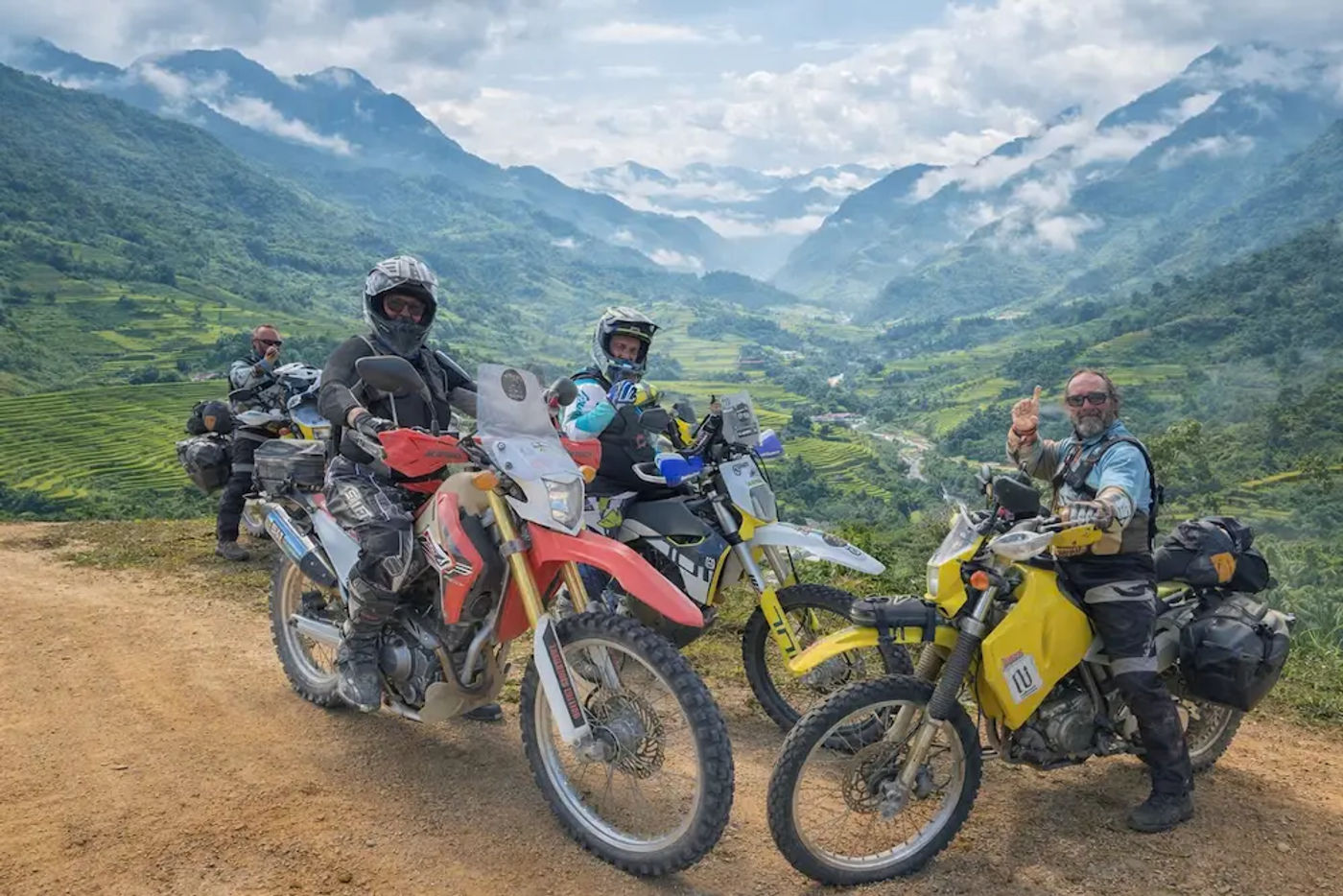
The first serious riding day. The road north from Ha Giang enters the Dong Van Karst Plateau Geopark — a UNESCO World Heritage landscape of jagged grey limestone peaks, narrow river gorges, and high-altitude villages that spent most of the 20th century in near-complete isolation from the lowlands. The Quan Ba Pass is the first major climb, and it delivers the first serious views — the Twin Mountains visible in the valley below, the plateau stretching north. Yen Minh sits at the midpoint and is worth a stop for lunch. The road into Dong Van in the afternoon runs along cliff edges above rice terraces cut directly into the karst. Approximately 150 kilometers, 4 to 5 hours including stops.
Day 3 — Dong Van to Meo Vac via Ma Pi Leng Pass
The single best riding day on the circuit. The Ma Pi Leng Pass runs for 20 kilometers along the edge of a cliff above the Nho Que River — a turquoise thread 1,200 meters below the road. The pass was built by hand over four years in the early 1960s and the construction marks are still visible in the rock face. It remains one of the most technically and visually intense roads in northern Vietnam. The descent into Meo Vac drops through switchbacks into a market town that trades with ethnic minority communities from across the surrounding highlands. Afternoon free in Meo Vac. Approximately 25 kilometers, but nobody rushes this day.
Day 4 — Meo Vac to Cao Bang via the Northeast Connector
This is the day most tours do not know about. The road from Meo Vac northeast toward Cao Bang via Bao Lac cuts through a mountain corridor that connects the Ha Giang plateau to the Cao Bang highlands without dropping back to the lowlands. The surface is sealed and the traffic is almost zero. The landscape shifts from the sharp grey karst of Ha Giang to softer green hills with wider valleys and river systems. Bao Lac sits at the midpoint and works well for lunch. Cao Bang city by evening. Approximately 200 kilometers, 5 to 6 hours.
Day 5 — Cao Bang — Ban Gioc Waterfall and Nguom Ngao Cave
A day off the main road. Ban Gioc waterfall sits 90 kilometers northeast of Cao Bang city on the Chinese border. The falls drop across a wide stone shelf into a pool shared between Vietnam and China — on busy weekends you can see Chinese tourists on bamboo rafts on the far side. The road there runs through limestone forest on a quiet district route. Nguom Ngao cave is 3 kilometers from the falls and takes about an hour to walk through — large chambers, active formations, river passage. Return to Cao Bang by afternoon. Approximately 180 kilometers round trip.
Day 6 — Cao Bang to Ba Be Lake
South from Cao Bang through Bac Kan province to Ba Be National Park. Ba Be Lake is Vietnam’s largest natural freshwater lake, sitting inside a karst basin surrounded by primary forest. The road into the national park is one of the quietest provincial routes in the north — the kind of riding where you can stop in the middle of the road to look at something and not hear a vehicle for five minutes. Overnight in a homestay on the lakeshore. Boat trip on the lake in the evening if the timing works. Approximately 170 kilometers, 4 to 5 hours.
Day 7 — Ba Be Lake to Son La
A longer transit day that crosses from the northeast into the northwest highlands. The road out of Ba Be connects to Highway 279 and then climbs into the Son La plateau via a series of passes above 1,400 meters. The northwest starts asserting itself — rice terraces on hillsides, Black Thai and Muong villages in the valleys below the road. Son La city sits at 700 meters and has enough history to fill an afternoon — the old French prison used to hold Vietnamese political prisoners is still standing in the middle of town. Approximately 280 kilometers, 6 hours.
Day 8 — Son La to Dien Bien Phu
The road west from Son La to Dien Bien Phu crosses the Pa Din Pass — a sustained mountain climb with views back over the Son La plateau — and drops into the wide flat valley where the 1954 battle effectively ended French colonial control of Indochina. The valley floor is rice paddy and war memorial. The French command bunker and the artillery positions are still there, and the Vietnamese military museum on the hill above town is worth two hours. Dien Bien Phu is a natural overnight stop and a logical jumping-off point for riders continuing to Laos. Approximately 170 kilometers, 4 hours.
Day 9 — Dien Bien Phu to Sapa via Lai Chau
The road north from Dien Bien Phu through Lai Chau to Sapa is one of the best sealed mountain routes in the northwest. The O Quy Ho Pass between Lai Chau and Sapa tops out above 2,000 meters and is the highest pass on the circuit. The descent into Sapa comes through cloud forest and drops the temperature noticeably — Sapa sits at 1,500 meters and runs cool even in summer. The town itself is busy with tourism but the roads around it — toward Ta Van, Y Linh Ho, and the Muong Hoa valley — are not. Approximately 200 kilometers, 5 to 6 hours.
Day 10 — Sapa to Hanoi via Mu Cang Chai or Direct
Two options for the final day depending on timing and what the group wants. The Mu Cang Chai option adds 60 kilometers and an hour but puts you on the rice terrace roads above the Mu Cang Chai valley — best in September and October when the paddies are gold before harvest, still good at any other time of year. The direct option follows Highway 32 from Sapa southeast through Nghia Lo and down to the Red River valley, rejoining the main road to Hanoi by mid-afternoon. Either way, Hanoi by evening. Approximately 300 to 360 kilometers depending on route choice.
Route Overview
- Duration: 7 days (compressed) or 10 days (full loop)
- Total distance: 700 km (7-day) to 900 km (10-day)
- Daily average: 100 to 280 km depending on day
- Terrain: sealed mountain road throughout, optional dirt track extensions around Ba Be and in the Sapa valley
- Highest point: O Quy Ho Pass, approximately 2,000 meters
- Start and finish: Hanoi
- Border crossing: not included on this tour, riders continuing to Laos should book the Vietnam Laos Motorbike Tour
Terrain and Road Conditions
Every kilometer on the North Vietnam Circuit runs on sealed tarmac. That does not mean it is easy.
Mountain roads in northern Vietnam narrow to a single lane on pass sections, with drops on one side and rock face on the other. Road surface quality varies by province , Ha Giang and the Cao Bang connector roads are generally well maintained; secondary routes around Ba Be and some Bac Kan district roads carry patches, subsidence, and sections where the road edge has eroded away. Wet season riding from June to September adds slick tarmac on shaded mountain sections, occasional water across the road on low-lying valley stretches, and reduced visibility on pass sections in cloud.
The circuit does not require offroad riding skills. Riders need to be comfortable managing a loaded motorcycle on narrow roads with significant exposure, making judgment calls on speed and positioning, and riding in variable conditions. A rider who has toured in mountainous regions outside Vietnam will adapt quickly. A rider who has only ridden in flat or urban environments should start with a shorter northern loop before attempting the full circuit.
Skill Level and Who This Tour Suits
Rated: Intermediate
The North Vietnam Circuit suits riders who are comfortable on a manual motorcycle, have some touring experience multi-day trips, loaded bikes, variable road conditions , and want to cover serious ground in northern Vietnam rather than a single highlight.
First-time riders in Southeast Asia who are confident on a bike can do this circuit with a guide, provided they are not intimidated by mountain roads and are honest about their experience level when booking. We adjust daily distances and pace for groups that need it.
This tour does not suit: complete beginners, riders who have not ridden a manual motorcycle before, or anyone who has not ridden in mountains. The Ha Giang Loop with full guide support is a better starting point for riders who are newer to this kind of terrain.
The offroad tours run on Honda CRF 250L and CRF 300L exclusively. Routes operate in the northwest highlands and central mountain regions using forest tracks, dirt passes, river valley paths, and single trail that touring bikes and rental scooters cannot access. Expect technical climbs on loose surfaces, loaded descents, river crossings that require a walk-through before committing, and remote overnight stops. Some nights are in proper guesthouses; others are in village homestays where the family cooks dinner and the nearest mechanic is two hours away. If you have offroad experience and want the most remote roads in Vietnam, this is where they sit.
The Bikes
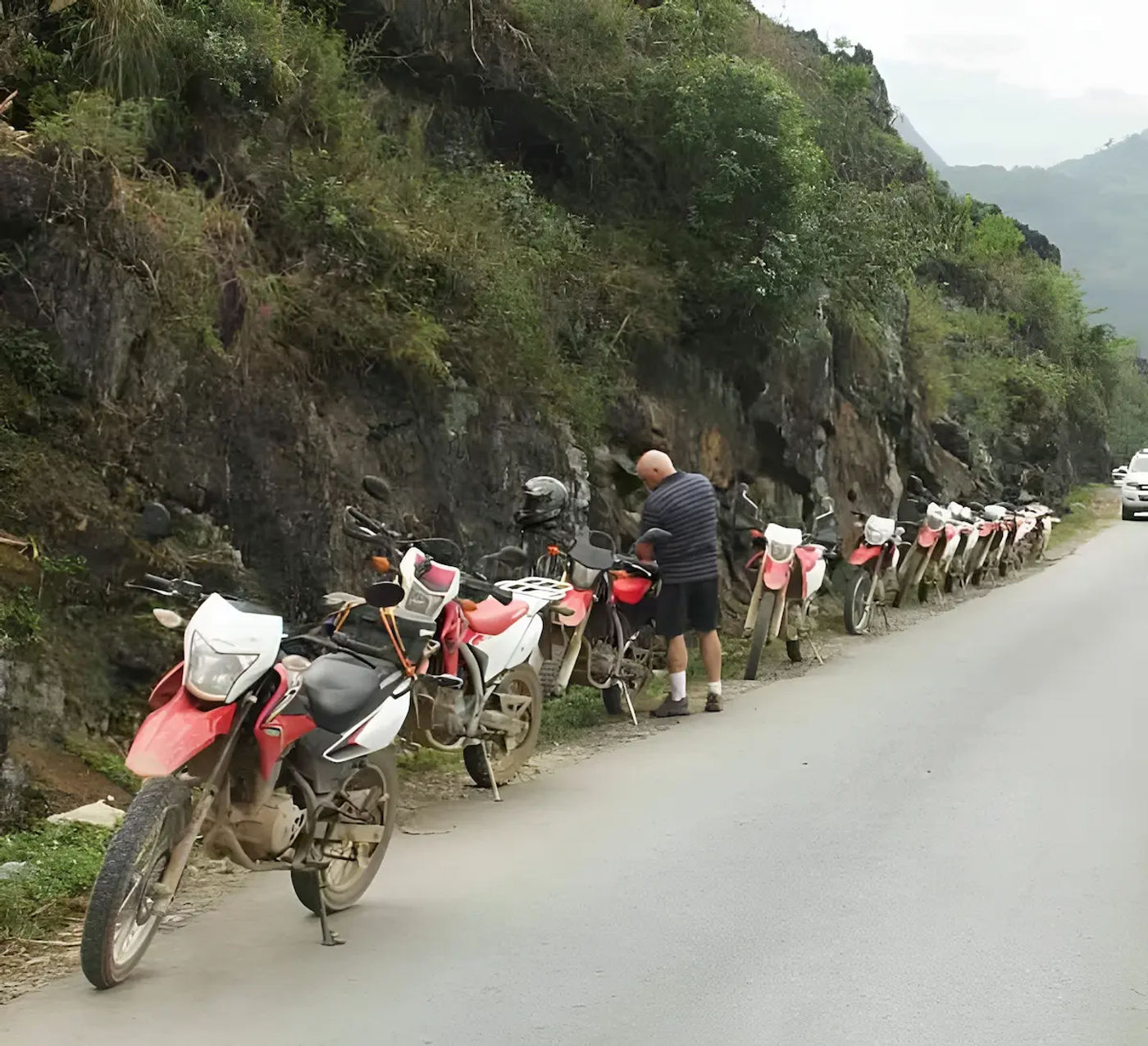
The North Vietnam motorbike tour runs on Honda XR 150, 190, or the CRF 300L as the primary bike.
The CRF 300L handles the sealed mountain roads, occasional rough sections, and optional dirt extensions around Ba Be and Sapa without needing anything more capable. Riders who prefer more road-biased performance can request the Royal Enfield Himalayan 450, which suits the sealed sections well and adds comfort on longer transit days.
Honda XR 150 is available for lighter riders or those who specifically request a smaller bike. Not recommended for the full 10-day circuit due to the longer daily distances on days 7 and 10.
All bikes leave with fresh oil, checked tyres, new brake pads where needed, full toolkit, and a first aid kit. Spare levers, cables, and a basic parts kit travel with the sweep rider on all group tours.
What Is Included
Included in all North Vietnam Circuit tours: guide fee, sweep rider on group tours, motorcycle rental for the duration, fuel on all riding days, accommodation throughout (guesthouses and one homestay at Ba Be), breakfast daily, and all national park entry fees.
Not included: international flights, Vietnam visa, personal travel insurance with motorcycle coverage, lunches, dinners, and any personal purchases on the road. We do not include dinners because the best meals in northern Vietnam come from asking locals where they eat, not from being directed to a restaurant on a tour operator’s commission list.
Travel insurance covering motorcycle riding is a mandatory requirement for all riders on this tour. If you do not have it, we will point you to providers before departure.
Group Size and Departures
Maximum 5 riders per group departure. Typical group size is 3-4. Fixed-date departures run from October through April, which covers the dry season for northern Vietnam. The circuit does run in the wet season for groups who specifically request it and understand the conditions — contact us for availability.
Private bookings are available year-round. On a private tour, departure date, daily pacing, and route variants are fully adjustable.
Frequently Asked Questions
How does the North Vietnam Circuit differ from a Ha Giang Loop tour?
The Ha Giang Loop covers one province and returns to Hanoi the same way it came, or via a southern exit route. The North Vietnam Circuit uses Ha Giang as the first section, continues northeast into Cao Bang and Ba Be, then crosses the northwest to Son La, Dien Bien Phu, and Sapa before returning to Hanoi. It covers four to five times the geographic range, visits significantly fewer-touristed areas, and takes between 7 and 10 days versus 4 to 7 for the loop alone.
What’s the best time of year to ride the North Vietnam ride?
October through April is the reliable window. October and November give warm days, clear mountain visibility, and the tail end of rice harvest season in Mu Cang Chai and the Sapa valley.
December through February is cold above 1,500 meters, the O Quy Ho Pass and the Ha Giang plateau drop to near zero on winter nights, but roads are dry and mountain air is clear. March and April push temperatures back up and are considered peak riding months before the early rains arrive in May.
Can I extend this tour into Laos?
Yes. The North Vietnam Circuit ends in Hanoi, but the route naturally passes through Dien Bien Phu on day 8, which is the departure point for the Tay Trang border crossing into Laos. Riders who want to continue into Laos rather than returning to Hanoi should book the Vietnam Laos Motorbike Tour, which picks up from Dien Bien Phu and crosses into Phongsali province. Contact us if you want to combine both into a single continuous trip.
Is there mobile phone signal on the route?
Viettel and few other local providers coverage reaches most of the circuit including Ha Giang city, Dong Van, Meo Vac, Cao Bang city, and Son La. Signal drops in the gorge sections between Ha Giang and Dong Van, on the Cao Bang to Bao Lac connector road, and in parts of Ba Be National Park. Our guides carry satellite communication backup on all multi-day tours. Do not plan anything time-critical that requires reliable data connection on the road.
Do I need any special permits to ride in Ha Giang or Cao Bang?
Not anymore. Still some small areas close to the Chinese border, such as Lo Lo Chai village, near the lung Cu, in Dong Van, require a permit in case of an overnight stay at the hmestays. We will cover that in case we include this area on any of our riders. The Cao Bang has no additional permit requirement beyond a standard Vietnam visa. Ba Be National Park charges an entry fee, also included.
Book the North Vietnam motorcycle tour
Fixed-date group departures run October through April. Private tours available year-round. To check dates, ask about a specific variant, or request a custom version of this route, contact us directly.
We respond to all inquiries within 24 hours.