Vietnam Laos Motorbike Tour: Hanoi to Luang Prabang Adventure Ride

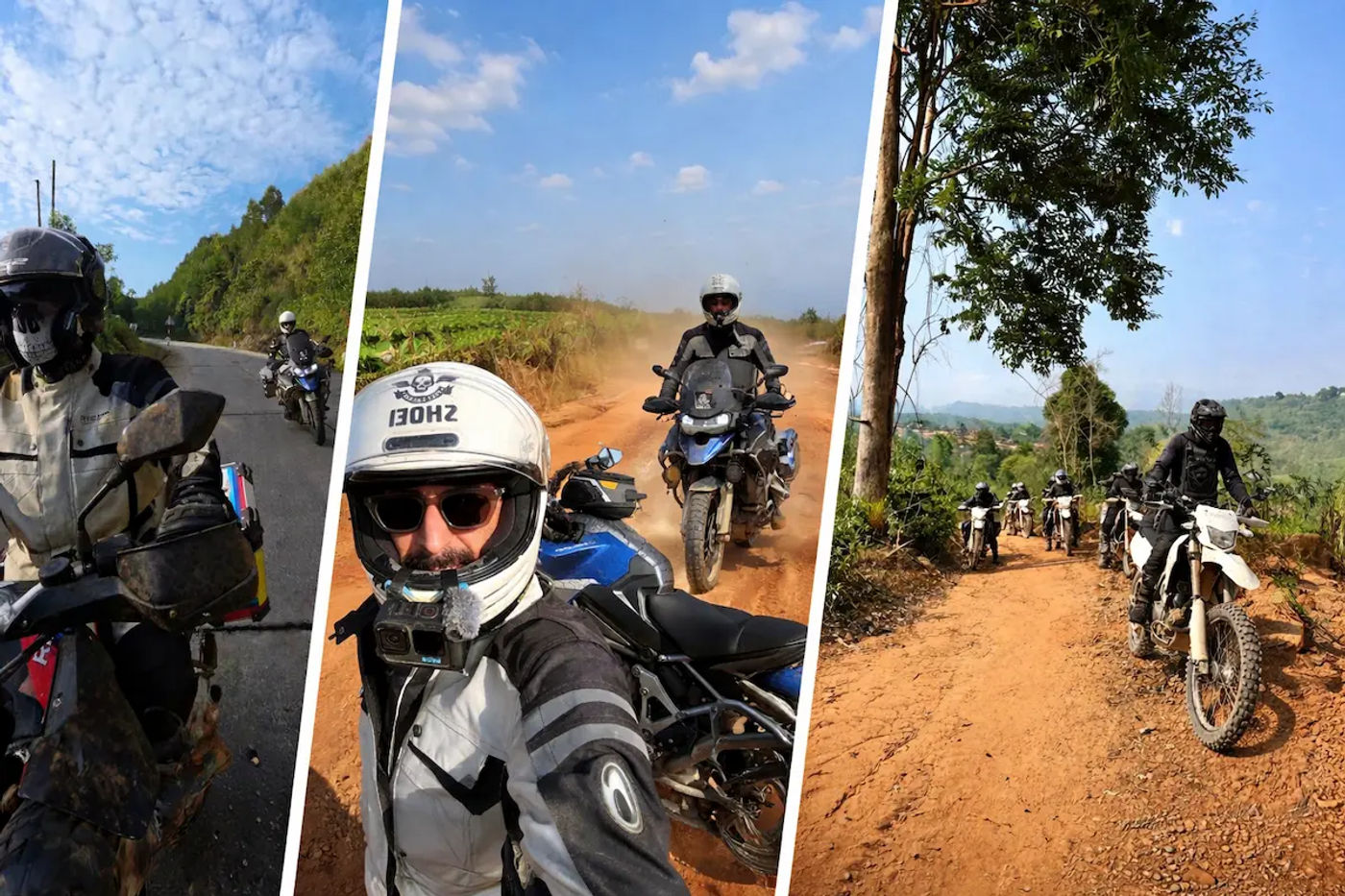
This is the cross-border run. Hanoi to Luang Prabang on a motorcycle, crossing from Vietnam into Laos at the Tay Trang border point near Dien Bien Phu, one of the most remote and least-used international crossings in mainland Southeast Asia.

The route covers the northwest Vietnam highlands first, climbing through Son La, Dien Bien Phu, and the Muong Lay valley before reaching the border. On the Laos side the road drops into Phongsali province and follows the Nam Ou river south through Luang Namtha, Nong Khiaw, and the river valley limestone country to Luang Prabang. Twelve to sixteen days depending on the variant. On-road and offroad sections throughout both countries. The bikes change at the border.

The Two Countries: What Changes When You Cross

Vietnam and Laos share a mountain border but the riding character on each side is completely different. Understanding that difference before departure helps set the right expectations for each section of the trip.

In northwest Vietnam the roads are sealed, maintained to a reasonable standard, and carry a mix of local traffic, agricultural vehicles, and the occasional truck heading to the Chinese border or Dien Bien Phu. The mountain passes are dramatic and the distances between towns are manageable. Fuel is available every 50 to 80 kilometers on the main routes. The rhythm of riding in Vietnam is faster,  the roads allow it and the terrain rewards pushing through a pass to see what is on the other side.

In northern Laos everything slows down. The road surfaces are rougher, the distances between fuel stops extend to 100 kilometers or more on some sections, and the traffic drops to almost nothing outside of the main towns.

The laterite roads north of Luang Namtha and the river valley tracks along the Nam Ou carry the kind of riding that requires reading the surface constantly rather than settling into a comfortable pace. Villages appear without warning and disappear just as fast. The riding in Laos demands more attention and rewards more patience.

The border crossing itself marks the change cleanly. One side is Vietnam. The other side is Laos. There is nothing gradual about it.

The Route: Vietnam Side

Hanoi to Hoa Binh and the Northwest Entry

The tour leaves Hanoi southwest on Highway 6, clearing the city traffic within the first hour and entering the low karst foothills of Hoa Binh province by mid-morning.

The Thung Khe Pass between Hoa Binh and Mai Chau is the first proper mountain road of the trip, a sealed climb through forest above the valley floor with views back over the Red River plain on clear days.

Mai Chau valley at the bottom is White Thai stilt-house villages and flat rice paddy, a deliberate contrast to the road that delivered it. Overnight Mai Chau or push to Moc Chau depending on the group’s pace preference. Approximately 140 kilometers, 3 to 4 hours.

The Northwest Highlands: Moc Chau to Son La

From Mai Chau the road climbs northwest through the Moc Chau plateau — tea plantations, pine forest, and dairy farms at 1,050 meters before descending to Son La province. The Pa Din Pass between Moc Chau and Son La is a sustained mountain road with views over the Son La basin from the top.

Son La city sits at 700 meters and carries history worth stopping for the old French colonial prison in the centre of town held Vietnamese political prisoners through the 1930s and 1940s and the building is still standing. The market below the prison is a working provincial market with Muong, Thai, and Hmong traders from the surrounding valleys. Approximately 120 kilometers, 3 hours.

Son La to Dien Bien Phu

West from Son La on Highway 6, crossing the Pa Din Pass and dropping into the wide flat valley of Dien Bien Phu. The valley floor is rice paddy and war memorial, the 1954 battle that ended French colonial control of Indochina was fought here across a valley that is still largely agricultural.

The French command bunker, the artillery positions, and General de Castries’ headquarters are preserved on the valley floor.

The Vietnamese military museum on the hill above town covers the battle from the Vietnamese side in detail. Dien Bien Phu is the last significant town before the Laos border and the natural final overnight on the Vietnam side. Approximately 170 kilometers, 4 hours.

Dien Bien Phu: Off-road Options Before the Border

Riders on the 14 and 16-day versions of the tour have an additional day in the Dien Bien Phu area before crossing to Laos. The offroad options here are the Muong Phang forest road, the route the Vietnamese command used to approach the battle positions through the hills east of the valley, and the district tracks north of the valley toward the Muong Lay reservoir.

The Muong Phang road is a dirt track through dense forest on a gradient that is manageable for intermediate riders. The Muong Lay reservoir road is sealed and drops through the valley above the Nam Na river before the terrain opens out toward the border. These sections are guided throughout and the guide selects the route based on current road conditions and group experience.

Dien Bien Phu to the Tay Trang Border

The road from Dien Bien Phu to the Tay Trang border crossing runs 34 kilometers northwest on a sealed provincial road through the valley above the Nam Ro river. The crossing sits at 1,300 meters elevation in a mountain pass on the Vietnamese side, a small border post with Vietnamese immigration and customs on one side and Lao immigration on the other.

This is not a busy crossing. Truck traffic is minimal and tourist volume is low compared to the main border gates at Lao Bao and Cau Treo. Processing time for the group depends on the day and the officials on duty. The guide handles all documentation for bikes and riders. Allow two to three hours for the full crossing process. Approximately 34 kilometers from Dien Bien Phu, 1 hour riding.

The Border Crossing: What Actually Happens

The Tay Trang to Sop Hun crossing requires Vietnamese exit stamps, Lao entry visas, and temporary import documentation for the motorcycles entering Laos.

Lao visa on arrival is NOT available at this crossing (apply in Hanoi, easy), the guide confirms current visa-on-arrival eligibility for your specific nationality before departure from Hanoi. The motorcycle temporary import permit for Laos is a separate document that the guide arranges in advance. Riders do not need to organize any border paperwork independently,  it is handled as part of the tour.

Carry passport photos for the Lao visa application at the border. Two photos per person is standard. The guide briefs the group on the full documentation requirements the evening before the crossing day.

Bikes used on the Vietnam side are exchanged at the border. Royal Enfield motorcycles for the Laos section are arranged through our Laos-based partner operation and collected at the Sop Hun side of the crossing. This keeps the bikes appropriate for each country’s road conditions and eliminates the complexity of cross-border vehicle registration for the full fleet.

The Route: Laos Side

Sop Hun to Phongsali

The first town on the Laos side is Sop Hun, a small border settlement in Phongsali province. The road south from Sop Hun to Phongsali town climbs through the most remote section of the entire tour , 73 kilometers of mountain road through primary forest with almost no habitation between the border and the provincial capital.

The road surface alternates between sealed and laterite depending on the section and the season. Phongsali town sits at 1,628 meters on a ridge above the surrounding valleys, the highest provincial capital in Laos and cold enough at night to require a proper jacket regardless of the time of year.

The Akha communities in the villages around Phongsali have maintained a way of life and a material culture that is distinct from every other ethnic group on the tour route. Approximately 73 kilometers from Sop Hun, 3 to 4 hours depending on surface conditions.

Phongsali to Muang Khua

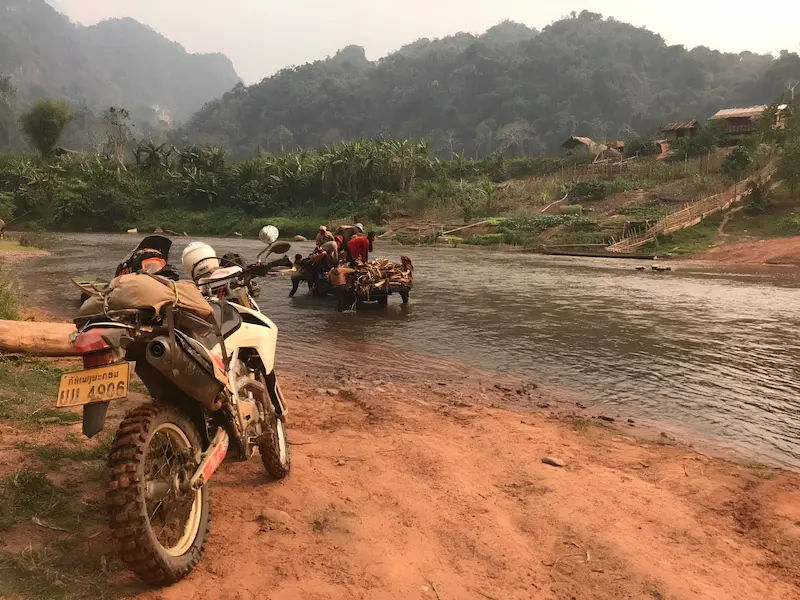
South from Phongsali the road descends from the ridge toward the Nam Ou river valley. The Nam Ou is the main waterway of northern Laos, running from the Chinese border south through Phongsali and Luang Prabang provinces to its junction with the Mekong above Luang Prabang city.

The road from Phongsali to Muang Khua follows the river valley on a laterite and sealed mix that requires reading the surface continuously, dry season gives a firm laterite that is manageable at pace; wet season turns sections to mud that demands slow and deliberate riding.

Muang Khua is a river town at the confluence of the Nam Ou and Nam Phak rivers, connected to the outside world primarily by the road south and the boat service that runs the river in both directions. Approximately 100 kilometers, 4 to 5 hours.

Muang Khua to Nong Khiaw: The Nam Ou Valley

The Nam Ou valley south of Muang Khua is where the Laos side of the tour finds its pace. The road runs through a limestone karst landscape that concentrates along the river, peaks rising vertically from the valley floor, the river bending between them, villages of Khamu and Tai Dam communities on the flat ground between the road and the water.

Nong Khiaw sits at a river bend where a single-lane bridge crosses the Nam Ou between limestone cliffs that rise 600 meters above the town. The karst walls above Nong Khiaw are the most dramatic single viewpoint on the Laos section and the town below them has enough guesthouses and restaurants to make it a comfortable overnight. Approximately 130 kilometers, 4 hours.

Nong Khiaw Off-road Options

Nong Khiaw is the base for the most concentrated offroad riding on the Laos section. The road east from town toward Ban Sop Jam and the villages above the Nam Tha river runs on a dirt track through forest and secondary growth.

The road north along the Nam Ou toward Ban Pakha and the remote villages between Nong Khiaw and Muang Khua is a laterite route that carries almost no motorized traffic outside of local motorbikes and the occasional supply truck. Both sections are guided.

The guide selects the specific tracks based on current conditions and the group’s offroad confidence. These are not technical sections in the way that northern Laos mountain tracks can be, they are river valley dirt roads that reward a slower pace and attention to the surface rather than aggressive riding.

Nong Khiaw to Luang Namtha via the Backroad

The standard road from Nong Khiaw to Luang Namtha runs west on Route 1 through Oudomxai, sealed, direct, and efficient. The tour takes the backroad instead. The route from Nong Khiaw northwest toward Vieng Phoukha and Luang Namtha via the secondary provincial road covers a section of northern Laos that almost no guided tours use.

The surface is rougher, the distances between towns are longer, and the road passes through Akha, Khamu, and Lanten minority villages that the main highway bypasses entirely. Luang Namtha by late afternoon. Approximately 200 kilometers via the backroad, 6 to 7 hours.

Luang Namtha: Nam Ha Protected Area Tracks

Luang Namtha sits at the edge of the Nam Ha National Protected Area, 222,400 hectares of montane forest on the Chinese and Myanmar borders that holds one of the highest levels of biodiversity in mainland Southeast Asia.

The dirt tracks into the buffer zone north and east of town are where the Laos offroad riding reaches its most serious. The road toward Ban Nam Dee and the Akha villages above the forest line is steep in sections, loose on the climbs, and requires confident handling on a loaded bike. The guide leads these sections at a pace set by the group and the sweep rider follows.

This is the section that riders with genuine offroad experience come specifically for and that riders who are newer to dirt riding find the most challenging on the entire tour. Approximately 60 to 80 kilometers of guided offroad riding from Luang Namtha.

Luang Namtha to Luang Prabang

The final riding section from Luang Namtha south to Luang Prabang covers approximately 300 kilometers on a mix of sealed and laterite road through the Luang Prabang mountain range. The road descends progressively from the northern highlands to the Mekong valley where Luang Prabang sits at 300 meters.

The last 60 kilometers into the city follow the Mekong bank on a sealed road through the lowland forest that frames the approach. Luang Prabang by late afternoon. Bikes returned to the Laos partner operation. Tour ends in the city. Approximately 300 kilometers over one or two days depending on the itinerary variant.

Off-road and Dirt Road Sections: Full Summary

The Vietnam Laos motorcycle travel carries more off-road variety than any other tour in the range. Here is where the dirt sections sit and what to expect from each.

Phongsali Province Roads: Laos

The road from Sop Hun to Phongsali and the district tracks around the provincial capital alternate between sealed and laterite. The laterite sections are the first serious offroad riding on the Laos side and the altitude adds a cold and wet element that the lower sections of the route do not carry. Surface condition depends heavily on season.

Muang Khua to Nong Khiaw River Valley: Laos

The Nam Ou valley road carries a mix of sealed and laterite throughout. Manageable for intermediate riders in dry conditions. Wet season requires more caution on the laterite sections where the surface loosens after rain.

Nong Khiaw Village Tracks: Laos

Dirt tracks east toward Ban Sop Jam and north along the Nam Ou. River valley terrain, manageable gradient, suitable for riders with basic offroad experience. Guided throughout.

Vieng Phoukha Backroad: Laos

The provincial backroad from Nong Khiaw to Luang Namtha via Vieng Phoukha is the longest continuous offroad section on the tour. Rough in places, remote between towns, and carrying the highest rewards for riders who want genuine backcountry Laos riding. Intermediate level throughout.

Nam Ha Protected Area Tracks: Laos

The most demanding offroad section on the entire tour. Steep climbs on loose surface to Akha villages above the forest line north of Luang Namtha. For riders with solid offroad experience. The guide assesses the group before committing to the upper sections.

The Bikes

The tour runs different bikes on the Vietnam and Laos sections. The reason is practical, the bikes appropriate for each country’s road conditions are different, and maintaining a fleet on both sides of the border is more reliable than transporting Vietnamese-registered vehicles across.

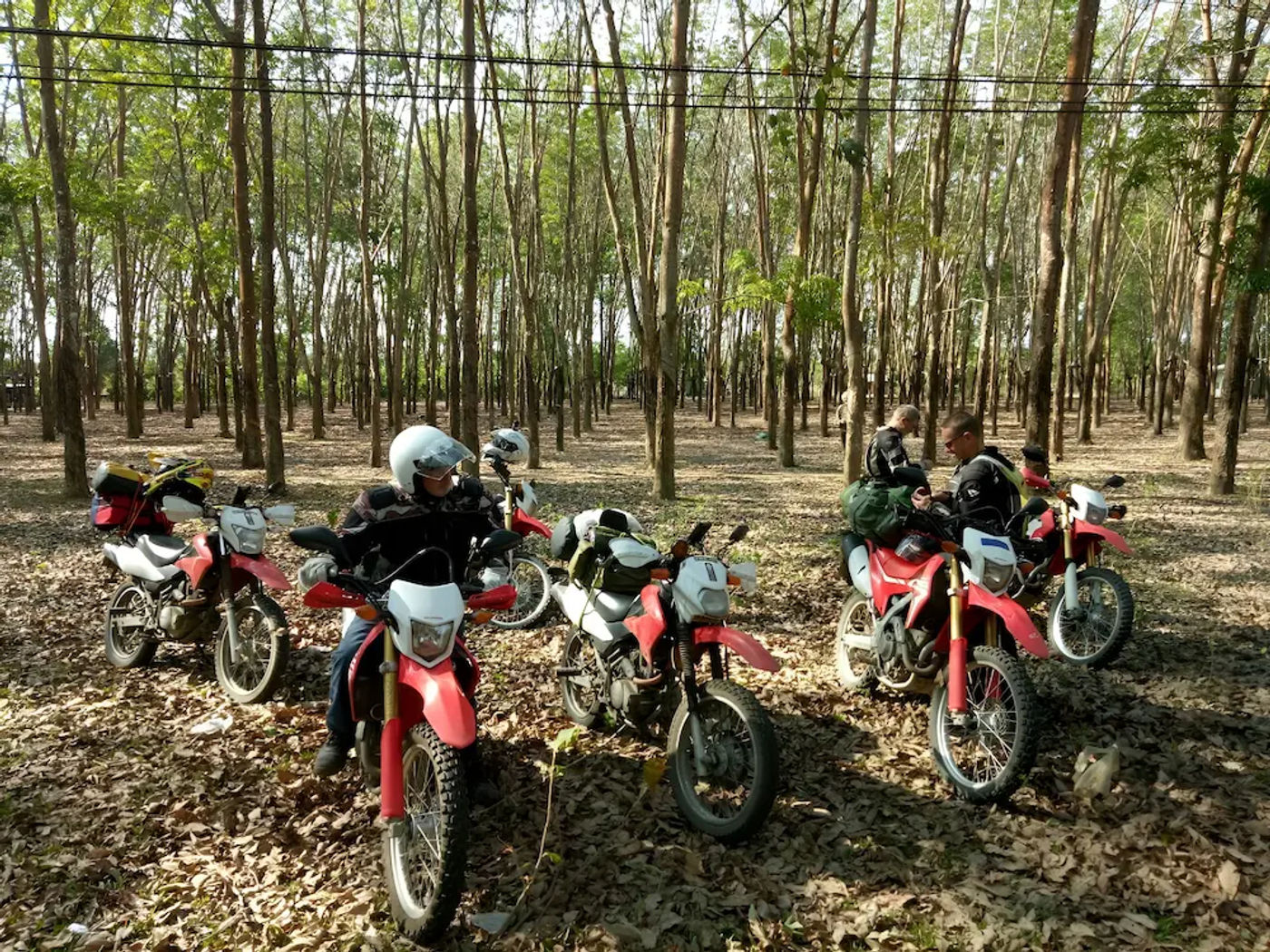
On the Vietnam side the tour runs Honda XR 150 (Of-course you can choose any bigger bike) for lighter riders and beginners on the sealed northwest passes.

Honda XR 190 suits intermediate riders who want more power on the highland roads without moving to a heavier adventure bike.

Honda CB500X covers the longer transit days and the sealed mountain sections for riders who prefer a road-biased touring setup.

BMW GS variants are available for riders who specifically request them and have the experience to manage a large adventure bike on the mix of sealed and dirt road in the northwest.

On the Laos side the bikes upgrade to Royal Enfield. The Himalayan 450 is the primary Laos bike, its combination of ground clearance, manageable weight, and sufficient power for the river valley roads and the highland tracks makes it the right choice for the Laos terrain.

The Himalayan handles the Nam Ou valley laterite, the Vieng Phoukha backroad, and the easier Nam Ha tracks without difficulty. For the most demanding offroad sections north of Luang Namtha, the guide assesses whether the Himalayan is appropriate for each rider or whether a lighter bike from the Laos partner fleet is a better match.

All bikes carry a full toolkit and first aid kit. Sweep rider carries spare levers, cables, filters, and a basic parts kit on every section of the tour.

Tour Variants

12-Day Core Route

Hanoi to Luang Prabang via the Tay Trang crossing. Covers the main northwest Vietnam highway route, the border crossing, and the Nam Ou valley to Luang Prabang on the primary road network. Sealed road dominant with laterite sections on the Laos side. Suitable for intermediate riders who want the cross-border experience without the extended offroad sections.

14-Day Extended Route

Adds the Muong Phang offroad day near Dien Bien Phu and the Nong Khiaw village track sections. More time in both the Vietnam northwest and the Nam Ou valley. Suitable for intermediate riders who want genuine offroad sections on both sides of the border.

16-Day Full Circuit

The complete tour. Adds the Vieng Phoukha backroad from Nong Khiaw to Luang Namtha and the Nam Ha protected area tracks north of Luang Namtha. The most demanding variant in terms of offroad riding and physical endurance. Suitable for riders with solid offroad experience who want the full range of what the cross-border route offers.

Reverse Direction: Luang Prabang to Hanoi

All three variants run in the reverse direction for riders flying into Luang Prabang and out of Hanoi. The reverse route starts on the Laos side and crosses into Vietnam at Tay Trang, finishing in Hanoi. Contact us to check reverse-direction departure dates.

What Is Included

Included: lead guide throughout, sweep rider, motorcycle rental on both sides of the border, Royal Enfield upgrade on the Laos section, fuel on all riding days, accommodation throughout, breakfast daily, all border crossing documentation and motorcycle temporary import permits for Laos, and Lao visa on arrival fee where applicable.

The cross-border documentation is the most administratively complex part of this tour and it is handled entirely by us. Riders do not organize any paperwork independently beyond carrying a valid passport and the required passport photos for the Lao visa application.

Not included: international flights, Vietnam visa, personal travel insurance with motorcycle coverage, lunches, dinners, and personal expenses. Travel insurance covering motorcycle riding in both Vietnam and Laos is mandatory. Confirm your policy covers cross-border riding before departure — not all motorcycle travel insurance policies extend across international boundaries automatically.

Best Time to Ride

The Vietnam northwest section runs best October through April. The Laos northern section runs best November through March.

The overlap window of November through March is the strongest period for the full cross-border tour. Roads on both sides are at their most stable, temperatures in Phongsali province are cold but manageable with the right gear, and the Nam Ou valley is clear and dry.

October is good for the Vietnam side, the rice harvest is active in the northwest valleys and the mountain air is clear after the summer rains. The Laos side in October still carries residual wet season moisture on the northern laterite sections. Rideable but the Vieng Phoukha backroad and the Nam Ha tracks are at their most challenging.

April is the last reliable month before heat and early rain arrive in the lowland sections. The Phongsali highlands stay cool through April and the Nam Ou valley is at its driest. A good month for the full 16-day circuit.

May through September is wet season on both sides. The cross-border tour runs in this period for groups who specifically request it with full understanding of conditions. The Vieng Phoukha backroad and the Nam Ha tracks are not recommended in wet season for any rider without advanced offroad experience.

Frequently Asked Questions

Do I need a separate visa for Laos?

Yes. Vietnam and Laos are separate countries with separate entry requirements. Most passport holders should obtain a Lao visa before arrival at the crossing. The guide confirms current visa-on-arrival eligibility for your specific passport before departure from Hanoi. Carry two passport photos for the Lao visa application at the border. The visa fee is included in the tour price.

What happens to my bike at the border?

The Vietnam-registered bikes used on the Vietnamese side of the tour are exchanged at the Tay Trang crossing. Royal Enfield motorcycles arranged through our Laos partner operation are collected at the Sop Hun side of the border. Riders do not transport their own bikes across the border.

This arrangement eliminates the temporary import complexity for Vietnamese-registered vehicles entering Laos and ensures the bikes on the Laos side are appropriate for Laos road conditions and locally registered.

How remote is the Tay Trang crossing?

The crossing sits at 1,300 meters in a mountain pass 34 kilometers northwest of Dien Bien Phu city. It is a functioning international border but it is not a major crossing — the facilities are basic and the volume of traffic is low. There is no town on either side of the crossing. The guide handles all documentation and the group moves through together. If there is a processing delay — which occasionally happens at low-traffic crossings — the guide manages communication with the border officials. Riders wait with the bikes.

Is the riding in Laos harder than Vietnam?

On the offroad sections, yes. The laterite roads in Phongsali province and the backroad from Nong Khiaw to Luang Namtha are rougher and more remote than the offroad sections in northwest Vietnam.

The distance between fuel and food stops is longer and the road conditions are less predictable. The sealed sections on the Laos side are generally in good condition on the main routes but the secondary roads deteriorate faster than Vietnamese provincial roads and are repaired less consistently. Riders who are comfortable on the Vietnam northwest section will manage the Laos side, the jump in difficulty is real but not extreme on the 12 and 14-day variants.

Can I extend the tour into southern Laos or Thailand after Luang Prabang?

The tour ends in Luang Prabang. Extension into southern Laos or onward to Thailand requires separate arrangements. Luang Prabang has an international airport with connections to Bangkok, Hanoi, and other regional cities. Riders who want to continue south through Laos by motorcycle can discuss options with us.

What level of fitness does this tour require?

Sixteen days of consecutive riding in mountain terrain across two countries requires physical endurance that shorter tours do not demand. The combination of altitude, variable road surfaces, long days in the saddle, and the accumulated fatigue of a multi-week trip means riders who arrive in poor physical condition will struggle by the second week.

No specific athletic training is required but general fitness and the ability to spend 6 to 8 hours a day on a motorcycle across consecutive days is the baseline. Riders who have completed a 7 to 10-day tour previously and are comfortable with that duration are in the right range for the full 16-day circuit.

Book the Vietnam Laos Motorbike Tour

Small Group departures run November through March for all variants. Private tours available year-round. To check departure dates, request the reverse-direction Luang Prabang to Hanoi option, or discuss a custom itinerary that combines this route with additional sections in either country, contact us directly.

We respond to all inquiries within 12 hours.

Scroll to Top