
Tet 2027 in Northern Vietnam: Ha Giang, Sapa and How to Plan
The northern highlands of Vietnam do not announce the new year quietly. Weeks before the official date, something shifts in the texture of daily life. Markets fill with kumquat trees strapped to the backs of motorbikes. Families begin repainting walls. The smell of simmering pork and sticky rice drifts from kitchen doors that are usually shut. Tet Nguyen Dan, the Lunar New Year, is not simply a holiday.
It is the seam of the year, the moment where everything that has accumulated is set down and something new is picked up. For anyone planning to travel through Sapa, Ha Giang, or the wider border regions in early 2027, understanding how Tet moves through these communities is the most useful preparation you can make.
- Check our north vietnam best motorbike adventures
When Is Tet 2027 and What Does the Date Actually Mean for Travel
Tet 2027 begins on Saturday 6th February, marking the first day of the Year of the Goat on the Vietnamese lunar calendar. The Goat carries associations of gentleness, creativity, and care in Vietnamese and broader East Asian tradition.
It follows the Horse year of 2026 and lands earlier in the Gregorian calendar than the previous year, which has specific implications for travel planning. An earlier Tet means the busy season arrives sooner, overlapping with a period when international travellers may not yet expect congestion. Treating the 6th of February as the only date that matters is a planning error.
The effects of Tet on transport, accommodation, food availability, and community life begin a full two weeks before that date and continue for two to three weeks after it.
The Kitchen God Festival: When the Season Really Starts
For most Vietnamese families, Tet preparation does not begin on the 6th of February. It begins on the 23rd day of the 12th lunar month with Tet Tao Quan, the Kitchen God Festival. In 2027, this falls in mid-to-late January. The Kitchen God, according to tradition, ascends to the heavens on this day to report on the household’s conduct over the past year. Families across the north prepare offerings, burn paper effigies, and release live carp into rivers as symbolic transport for the deity’s journey.
In highland villages, this day marks the unofficial start of the Tet season. If you are in Sapa or Ha Giang during this window, you may notice an uptick in incense smoke rising from homes, freshly cut peach blossom branches appearing outside doorways, and a general sense of the community beginning to turn inward.

Key Dates to Keep in Your Planning Across the Full Tet Window
For practical travel planning, the Tet window in 2027 runs from approximately 20th January through to 20th February.
Transport networks across Vietnam enter their busiest period from around 28th January as families begin travelling home. The days from 4th to 6th February represent peak movement, with trains and buses running at absolute capacity. The first two days of Tet itself, 6th and 7th February, are the quietest on the roads and the most private within communities.
From around 8th February, outward movement resumes as extended family visits begin. The post-Tet surge in tourist traffic in Ha Giang and Sapa runs from approximately 9th February through to 19th February, a ten-day period that anyone planning to visit during this window needs to account for fully.
How the Year of the Goat Is Understood in Highland Communities
Zodiac years carry real cultural weight in Vietnamese society, and this is no less true in the Hmong, Dao, and Tay communities of the northern highlands. The Goat year is broadly associated with harmony, patience, and a returning to care for family and land.
Farmers in particular pay attention to the zodiac character of the incoming year, as it is believed to influence rainfall patterns, crop success, and community relations. In some highland villages, the ritual prayers offered on the first morning of the new year include specific language drawn from the year’s animal character.
Travellers who ask their guides or hosts about the Goat year will often receive a thoughtful, considered response rather than a dismissive one. It is a genuine part of how time is understood here.
What Tet Looks Like in the Northern Highlands
Tet in the mountains is not the same celebration it is in Hanoi or Ho Chi Minh City, and the differences go beyond landscape. Highland communities, particularly those of the Black Hmong, Flower Hmong, Red Dao, and Tay ethnic groups, layer their own calendars, rituals, and customs onto the national holiday in ways that create something distinct from anything you will read about in a general Vietnam travel guide.
House Cleaning, Repair, and the Spiritual Preparation of Domestic Space
In the weeks before Tet, highland homes undergo a thorough transformation. This goes beyond sweeping floors. Walls are whitewashed or repainted. Roof repairs that have been postponed through the busy harvest season are completed before the new year arrives. The family altar, the central spiritual object of most Vietnamese and highland ethnic homes, is cleaned and restocked with fresh offerings.
In Hmong homes this might include offerings of paper, rice, and incense. In Red Dao homes, the altar preparation is more elaborate, often involving specific ritual objects connected to the family’s spiritual lineage.
The reasoning behind this intensive cleaning is rooted in belief rather than aesthetics: carrying dirt, debt, or disorder into the new year is considered to invite the same into the months ahead. The house that enters Tet clean and repaired enters the year on the right footing.
Banh Chung and the Food That Holds the Season Together
No single food defines northern Tet more completely than banh chung. These are dense, square parcels of glutinous rice packed around a filling of mung bean paste and braised pork belly, wrapped in layers of dong leaves and tied with bamboo string before being boiled for eight to twelve hours over a wood fire. The process is communal and slow. Families gather around the fire the night before Tet to watch the parcels cook, telling stories, sharing rice wine, and keeping the flame steady through the night. The square shape is deliberate, representing the earth in Vietnamese cosmology, in contrast to the cylindrical banh tet of the south which represents the sky.
Alongside banh chung, highland kitchens prepare gio thu, a firm terrine made from pork ear and skin pressed with spices, pickled mustard greens cut with vinegar and sugar to balance the richness of the meat, and a slow-braised pork belly that cooks until the fat becomes soft and the sauce reduces to a dark, glossy coat.
Li Xi and the Custom of Lucky Money
The red envelope tradition of li xi is practised widely across the north and carries specific meaning in highland communities. Red envelopes containing small amounts of money are given to children as a symbol of blessings for their health, growth, and good fortune in the year ahead. Elders receive them from younger family members as a gesture of respect. Unmarried adults often receive them from parents and relatives as a form of encouragement. The amount of money inside the envelope is secondary to the act of giving it.
A red envelope containing five thousand dong, roughly twenty cents, carries the same symbolic weight as one containing fifty thousand. In highland communities where cash income is more limited, the gesture is understood entirely in its symbolic register. Visitors who are hosted by a family over Tet and want to acknowledge the occasion appropriately are better served by bringing a small gift, fruit, good tea, or something practical, than by attempting to replicate the li xi tradition, which belongs to specific family and community relationships.
Riding the Ha Giang Loop Around Tet 2027
Ha Giang province produces some of the most dramatic road journeys available to travellers in Southeast Asia. The circuit through the Dong Van Karst Plateau, across the Ma Pi Leng Pass above the Nho Que River, and through the valleys of Meo Vac and Yen Minh draws both independent riders and guided tour groups in significant numbers. Tet compresses all of that demand into a shorter window and redistributes it unevenly across the calendar. Knowing where that pressure sits determines whether your loop is a highlight or a logistical ordeal.
The Loop in Late January 2027: Cold Roads and Quiet Passes
Arriving in Ha Giang in the final week of January 2027, roughly ten days before Tet, places you in one of the loop’s calmer windows. The cold is real at this elevation. Morning temperatures in the Dong Van area can sit close to freezing, and the passes above 1,400 metres carry a wind chill that makes proper riding gear non-negotiable. But the roads are spacious. The guesthouses in Dong Van, Lung Cu, and Meo Vac have available rooms.
The families running homestays along the route have time to sit with guests in the evenings. The limestone karst landscape, grey and stark in the winter light, has a severity that photographs rarely capture. The buckwheat flowers of autumn are long gone, but the mountains in January have their own austerity that rewards those who come for the landscape rather than the colour.
- Check out Ha Giang loop tour from Hanoi
The Loop During the First Days of Tet: 6th to 8th February 2027
These are the most complex days to manage on the loop and the most rewarding if managed well. Domestic Vietnamese tourism essentially pauses for the first two days of Tet. Tour groups that were running through the province return to their home cities. The roads between the passes and the valley towns carry almost no traffic. The Ma Pi Leng Pass, which during peak season sees a near-continuous stream of motorbikes, can be ridden in long stretches of complete solitude during these days.
The trade-off is significant. Many family-run homestays are closed for Tet itself. Food availability along the route drops sharply. Petrol stations in smaller villages may observe reduced hours. Anyone choosing to ride during this window needs to carry extra fuel from Ha Giang city, bring food for at least one full day, and confirm explicitly before departure that each night’s accommodation is open and staffed.
The Post-Tet Surge: 9th to 19th February 2027
From around 9th February, the loop enters its most congested stretch. Vietnamese domestic tourists who celebrated at home begin taking their annual leisure travel. Tour operators from Hanoi send groups north. International travellers who planned their timing around the post-Tet festival atmosphere arrive in Ha Giang city and begin renting motorbikes. The result is roads that feel genuinely busy by the standards of a mountain region. Homestays in popular stops like Dong Van fill by early afternoon.
The guesthouses in Ha Giang city that serve as the starting point for loop hire are booking out by midday. Travellers who arrive during this period without pre-booked accommodation for every night will spend significant energy finding beds rather than riding. If your dates fall within this window, book everything before you leave Hanoi and approach each day’s riding with more time margin than you think you need.
What to Book, When to Book It, and What to Carry
Book transport from Hanoi to Ha Giang city as soon as your dates are fixed, and do the same for every night of accommodation along the route. The limousine bus services that run from My Dinh bus station to Ha Giang city are the most comfortable option and sell out during the Tet window. For motorbike hire in Ha Giang city, reputable semi-automatic and automatic bikes can be pre-arranged through your guesthouse.
Carry your full complement of riding gear from Hanoi. Gloves and a windproof outer layer are essential in February. Download offline maps of the entire loop before departure. Signal on the route through Meo Vac and certain valley sections drops to zero. Share a rough daily itinerary with someone who can raise concern if you miss a check-in.
Sapa in the Tet 2027 Window
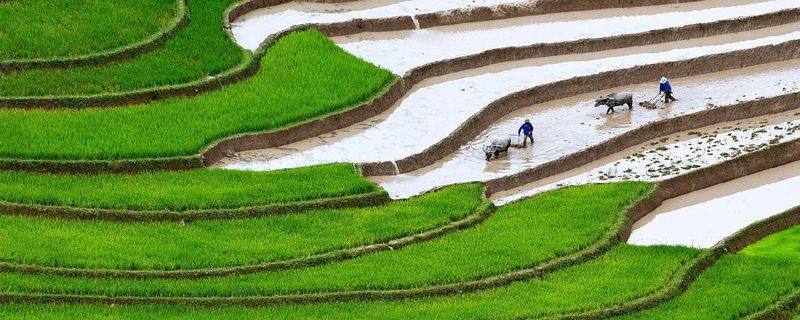
Sapa sits above 1,500 metres on the edge of the Hoang Lien Son range, and in February it carries the last of the highland winter. Cloud rolls through the town in the morning. The terraced rice fields in the Muong Hoa Valley below are bare and brown, resting between harvest and planting. It is a landscape that many visitors, accustomed to the green explosion of summer photography, find unexpectedly moving. Tet shifts the human layer of this landscape considerably.
Arriving Before Tet: What Sapa Looks Like in Late January
In the final week of January 2027, Sapa town is running but not crowded. The Saturday market, which draws Hmong and Dao traders from the surrounding villages, is still active but has begun to wind down as families prepare for the holiday period ahead. Trekking guides are available and the trails into the valleys below Ta Phin and around Ban Ho are quiet enough that you can walk for an hour without seeing another foreign traveller.
The Black Hmong women who sell embroidery and silver jewellery near the central market square are beginning to spend more time preparing at home. Village guesthouses along the trail routes in Lao Chai and Ta Van have beds and time for their guests. This is a window that rewards those who travel slowly and find conversation more useful than a checklist.
Tet Day in Sapa: 6th and 7th February
Sapa on the first day of Tet is a town that has largely turned inward. The smaller restaurants and family-run cafes that give the lanes below the church their character are shuttered. The food market is closed. Guesthouses staffed by local families maintain skeleton service but the warmth and attention of normal operations is replaced by a quieter, more formal hospitality as staff divide their attention between guests and their own families.
Walking through the town on the morning of the 6th, you pass houses where incense smoke drifts through doorways and the sound of a family meal carries from an upstairs window. The landscape below the town is completely still. If you are already in Sapa on these days, the most natural thing to do is walk gently, eat whatever your accommodation provides, and observe without intruding.
The Ten-Day Crowd Period: 8th to 18th February 2027
The crowd pattern in Sapa after Tet follows the same logic as Ha Giang but with higher absolute numbers. Sapa is more accessible from Hanoi, the infrastructure for mass tourism is more developed, and the town’s international profile draws visitors who would never ride the Ha Giang Loop. From around 8th February, the overnight trains from Hanoi to Lao Cai fill fast.
The cable car to Fansipan, the highest point in Indochina, develops queues that can last two hours or more. The trekking trails into the Muong Hoa Valley become a procession. Hotels at every price point in Sapa town are fully booked, and homestays in the valley villages below fill through group bookings. For travellers who are flexible on dates, shifting arrival to after 20th February moves you past this period and into a Sapa that has recovered its usual pace.
Spring Festivals in Hmong and Dao Villages After Tet
Separate from the national Tet holiday, the highland ethnic communities around Sapa and across Ha Giang province host their own spring festivals in the weeks following the new year. These events follow village-specific calendars and are not coordinated at a regional or national level. They do not appear on tourist itineraries by default. They are the most genuinely local events a visitor can attend in northern Vietnam.
The Structure of a Hmong Spring Festival Day
A Hmong spring festival begins before most visitors would consider waking up. Preparations within the village start in the dark, with ritual offerings made at family altars and community gathering points. By the time the sun reaches the valley floor, villagers from surrounding hamlets have begun arriving on foot and by motorbike, often in family groups, the women in their finest indigo and embroidered dress, the men in dark jackets with embroidered hems.
The festival occupies the main open ground of the village, which might be a school courtyard, a flattened area below the main path, or a meadow cleared for the occasion. There is no stage, no schedule posted, and no announcer. Things begin when enough people have arrived and continue until the light starts to go.
Khen Music and the Circle Dance
The khen is the defining instrument of Hmong cultural life. It is a mouth organ built from six bamboo pipes of different lengths bound through a hardwood resonator, and it produces a continuous harmonic sound created by the player breathing both in and out while moving through a sequence of finger positions. Young men play the khen at spring festivals in a style that is simultaneously musical performance and physical display. The player circles slowly, dips, and rises, spinning the instrument while maintaining the melody, a technique that takes years to develop.
Around the khen players, groups of young women and men form loose circles and move in a shared step, a social choreography that is also, in the context of spring festivals, a form of courtship. It is not performed for observers. It happens because it is the time of year when it happens.
Traditional Clothing at Spring Festivals: What You Are Looking At
Hmong textile tradition is one of the most technically complex in mainland Southeast Asia, and spring festivals are the occasion when months of winter work becomes visible. The production of a single complete festival outfit for a Flower Hmong woman involves growing organic hemp, retting and spinning the fibre by hand, weaving fabric on a backstrap loom, applying beeswax resist patterns to sections of the cloth, dyeing repeatedly in indigo vats until the colour reaches the required depth, removing the wax, and then embroidering intricate geometric designs in silk thread across the cuffs, collar, and apron. The patterns are not decorative in a general sense. They carry encoded information about the weaver’s village, clan affiliation, and marital status. A woman from Dong Van wears different patterns than one from Meo Vac. A widow wears different details than a bride.
This is a visual language, and the spring festival is one of the few occasions when it is read publicly by an entire community. Alongside these traditional garments, younger women in some villages bring their own interpretation to the occasion, pairing traditional elements with brighter synthetic fabrics, sequined details, or contemporary cuts. These choices sit alongside the older work without tension. Fashion has always moved.
Folk Games and What They Say About Highland Life
The games played at Hmong and Dao spring festivals are not casual entertainment. They reflect the specific capabilities that highland farming life demands and develops. Top spinning is common: participants carve their tops from hardwood and compete on accuracy of landing and duration of spin, a skill that requires calibration developed over years. Crossbow shooting targets are set at distances that test genuine accuracy, not carnival-level ease. Tug of war between teams from different villages carries genuine rivalry and draws the loudest crowd of any event in the day.
In some communities, a stone-lifting competition tests raw strength using rocks that are part of the village’s permanent equipment. These competitions have stakes. Village pride, reputation, and in some contexts marriage eligibility, are all in play. Watching without understanding this makes the games seem like recreation. Understanding it makes them something else entirely.
How to Prepare for Northern Vietnam During the Tet 2027 Window
The distance between a well-prepared Tet journey and a stressful one is almost entirely determined before departure. The variables that frustrate travellers during this period, sold-out transport, full guesthouses, limited food, closed businesses, are all predictable and all manageable with enough lead time.
Transport from Hanoi: Train, Bus, and the Booking Guide
The overnight train from Hanoi to Lao Cai, the rail gateway for Sapa, runs in both soft sleeper and hard sleeper classes and takes approximately eight hours. Soft sleeper cabins with four berths are the most comfortable option and during the Tet window sell out up to three weeks before departure. The same train is used by Vietnamese families returning home for the holiday, so competition for berths is intense in both directions.
For Ha Giang, the limousine bus services from My Dinh Bus Station are the standard option for independent travellers. These are modern sleeper coaches that cover the roughly five-hour journey to Ha Giang city. They also fill quickly during the Tet period. Book both legs of any journey, outward and return, the moment your dates are confirmed.
What to Wear and What to Carry in February at Altitude
February is the coldest month across the northern highlands. Sapa town regularly sits below ten degrees Celsius during the day and drops further at night. The valleys below Sapa, where homestays are located along trekking routes, are marginally warmer but not warm. Ha Giang’s higher passes, particularly around Dong Van and the area approaching the Chinese border at Lung Cu, can feel genuinely alpine with wind chill factored in. Pack thermal base layers, a mid-layer fleece or down jacket, and a waterproof outer shell.
Waterproof hiking boots or trail shoes are more useful than trainers on wet highland paths. For riders on the Ha Giang Loop, bring gloves rated for cold weather, a balaclava or neck gaiter, and waterproof riding trousers. Do not plan to buy adequate cold-weather gear in Sapa or Ha Giang. What is available locally is basic.
Cash, Connectivity, and Moving Through Remote Areas
ATMs exist in Sapa town and Ha Giang city. Beyond those two centres, reliable ATM access becomes significantly less certain. Along the Ha Giang Loop, villages like Dong Van, Meo Vac, and Yen Minh have basic banking facilities but machines can be out of service for days without notice. Carry sufficient cash to cover your entire time on the loop before leaving Ha Giang city.
Budget generously for accommodation, meals, petrol, and one unexpected night if plans shift. Mobile data coverage on the loop is strongest on the Viettel network, but signal drops in certain valleys and passes regardless of provider. Download offline maps of the entire route, a contact list of each night’s accommodation, and a copy of any relevant booking confirmations before entering the loop. This is basic preparation that makes genuine difficulty much less likely.
Flexibility as a Non-Negotiable Travel Condition
Mountain roads in February after rain are not the same roads they are in dry weather. The passes above Dong Van in particular can develop patches of mud or surface water that require a reduction in speed and an increase in concentration. Highland buses run on schedules that respond to road conditions, passenger numbers, and driver discretion rather than fixed timetables. A guesthouse that confirmed your booking may have a family emergency that closes it for the night you arrive.
None of these scenarios are disasters if your itinerary has space. Scheduling each day’s riding to finish at the destination by early afternoon rather than by dark is a practical rule that removes most of the danger from the equation. The highlands will determine some of your travel, and that is more a feature of travelling here than a problem with your planning.
Choosing Your Window: A Direct Comparison
Each timing window around Tet 2027 offers a different version of northern Vietnam. None of them is objectively better. They suit different travellers with different priorities.
Travelling before 28th January gives you the quietest roads and the most accessible village life, with the trade-off of colder weather and communities mid-preparation rather than mid-celebration. This window suits slow travellers, those with genuine interest in daily life rather than festivals, and anyone who finds crowded trekking trails actively unpleasant.
Arriving on 4th to 6th February places you inside the final days of preparation and the arrival of the new year. Transport is at maximum stress during this window and requires flawless advance booking. The reward is access to a side of Vietnamese highland life that most travel itineraries are designed to skip.
Arriving on 6th to 8th February and riding the Ha Giang Loop or walking the Sapa valleys during the first days of Tet is the most logistically demanding option with the highest possible experiential return. Very few travellers manage this well. Those who do, and who have confirmed accommodation, food, and fuel for every step of it, often describe it as the most distinctive travel experience they have had in Southeast Asia.
Arriving from 9th to 19th February drops you into the most crowded period. Everything is available, everything is booked, and the energy of the season is everywhere. It is a valid choice with thorough preparation but not the choice for anyone sensitive to crowds.
Arriving from 20th February onwards means the surge has passed. Village festivals are still active across the highlands into March. The landscape is beginning its slow transition toward warmer days. This is the window that gives you the most of the season with the least of its logistical difficulty. To know more, check out things to do in Sapa.
About the Author
Hamid is a rider behind IRTouring, off-road guide, and motorbike trip organiser based in northern Vietnam, Hanoi. He has been leading adventure routes through Ha Giang, Sapa, and the wider highlands for years, and his work has been featured in VnExpress. He writes from experience, not research.
Tet 2027 Northern Vietnam FAQs
When exactly is Tet 2027 and how long does it affect travel?
Tet 2027 begins on Saturday 6th February, the first day of the Year of the Goat. The effects on transport, accommodation, and daily life start from around 20th January and continue through to 20th February. The busiest travel days are 4th to 6th February, and the post-Tet tourist surge runs from 9th to 19th February.
Can you ride the Ha Giang Loop during Tet?
Yes, but the experience varies significantly depending on which days you ride. Late January offers quiet roads and available homestays. The first two days of Tet (6th and 7th February) give near-empty passes but require self-sufficiency with fuel and food, as many businesses close. From 9th February onward, the loop becomes congested and accommodation fills by early afternoon. Pre-book every night before leaving Hanoi.
Is Sapa worth visiting during the Tet period?
It depends on your dates. Late January is quiet and accessible. The first days of Tet itself are still and inward-facing, a genuine experience if you adjust your expectations. From 8th to 18th February, Sapa is at its most crowded, with trains from Hanoi selling out and guesthouses fully booked. Arriving from 20th February gives you spring festival access without the peak congestion.
What transport do I need to book in advance for the Tet window?
Book the overnight train from Hanoi to Lao Cai (for Sapa) and the limousine bus from My Dinh Bus Station to Ha Giang city as soon as your dates are fixed. Soft sleeper train berths sell out up to three weeks before departure during the Tet period. Book both outward and return legs at the same time.
What should I pack for northern Vietnam in February?
February is the coldest month in the highlands. Pack thermal base layers, a mid-layer fleece or down jacket, and a waterproof outer shell. Riders on the Ha Giang Loop need cold-weather gloves, a balaclava or neck gaiter, and waterproof riding trousers. Do not rely on buying adequate gear locally in Sapa or Ha Giang. Waterproof boots or trail shoes are more practical than trainers on wet highland paths.
Are ATMs available along the Ha Giang Loop?
ATMs exist in Ha Giang city and in larger towns like Dong Van and Meo Vac, but machines can be out of service for days without notice. Withdraw enough cash in Ha Giang city to cover your entire loop, including accommodation, meals, petrol, and a buffer for an unexpected extra night. There are no ATMs in smaller villages along the route.