10 Stunning Routes in Vietnam Every Rider Should Experience
If you enjoy the sense of freedom that comes with the open road, sweeping mountain views, and the thrill of discovering new regions, Vietnam offers some of the most rewarding riding routes in Southeast Asia. From the dramatic mountain roads of Ha Giang and the layered rice terraces of Mu Cang Chai to the coastal stretches near Da Nang and the rolling coffee landscapes of Buon Ma Thuot, each region delivers a distinct experience shaped by nature and local culture.
These routes showcase Vietnam’s geographic diversity and make long-distance riding both visually rich and deeply engaging. Join Vietnam Motorbike Tour to explore the country’s most scenic routes and experience 10 stunning riding destinations that define Vietnam’s road travel experience.
Here are the 10 Best Motorbike Destinations in Vietnam
There are few ways to experience Vietnam as closely as traveling by motorbike, where the road opens up endless views and everyday life unfolds at a natural pace.
From the famous mountain passes of Northwest Vietnam to coastal roads that trace the deep blue waters of the central region, each route offers landscapes shaped by terrain, climate, and local culture. Riding through these areas allows travelers to pause whenever they choose, whether to watch the sun dip behind the hills, take in the scent of ripening rice fields, or share a brief conversation with locals along the way.
In this guide, we introduces 10 best motorbike routes in Vietnam that showcase the country’s most rewarding destinations for motorbike travel.
Halong Bay – a must see for anyone visiting Vietnam
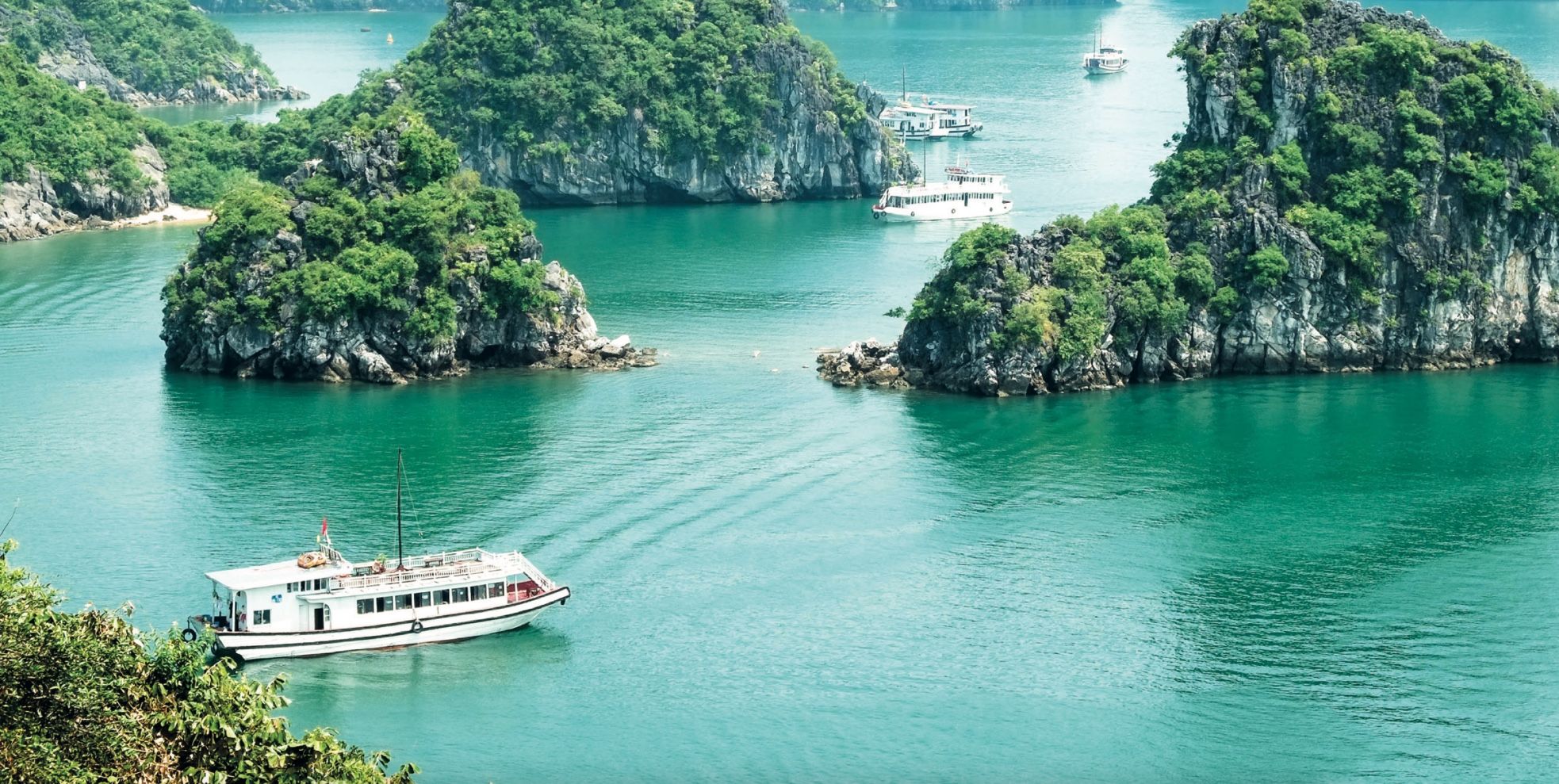
Ha Long Bay is an ideal destination for travelers who want to explore Vietnam’s coastal landscapes while enjoying scenic road travel. Known worldwide for its dramatic seascape and limestone formations, the area also offers calm coastal routes that pass fishing villages, quiet harbors, and viewpoints overlooking the bay. These roads provide a relaxed pace and constant access to natural scenery, making the journey as rewarding as the destination itself.
Recognized as a UNESCO World Natural Heritage Site, Ha Long Bay is defined by thousands of limestone karsts and caves shaped over more than 500 million years of geological history. Sheer stone pillars rise from emerald-green waters, creating one of Vietnam’s most iconic natural settings. As the coastline unfolds under clear skies, the contrast between sea, rock, and light delivers a visual experience that captures why Ha Long Bay remains one of the country’s most celebrated landscapes.
- Suggested itinerary: Halong Bay to Angkor Wat 14 day trip
Phu Quoc Island – Free visa for ALL nationalities
Phu Quoc is an excellent choice for travelers who want to balance coastal relaxation with light adventure while exploring by motorbike. Located in most southern point of Vietnam, it is the country’s largest island and is often called the Pearl Island thanks to its clear waters, white sand beaches, and largely preserved natural landscapes. The island’s laid-back atmosphere and well-maintained roads make it especially appealing for slow, scenic travel.
Traveling around Phu Quoc by motorbike allows easy access to tree-lined roads and coastal routes connecting Sao Beach, Long Beach, Khem Beach, and the traditional fishing village of Ham Ninh. Along the way, riders can stop at seaside viewpoints, enjoy fresh coconut water, or watch the sun set over the Gulf of Thailand as fishing boats return to shore. These simple moments define the island’s calm rhythm.
Beyond the beaches, Phu Quoc National Park covers a large portion of the island and protects a rich primary forest ecosystem. Nature-focused routes lead to pepper farms, traditional fish sauce producers, and local pearl farms, offering insight into the island’s heritage and daily life. Together, these experiences make Phu Quoc one of Vietnam’s most well-rounded destinations for motorbike exploration.
- Check out Phu Quoc visa (Free to enter for all nationalities)
Mui Ne Beach – best for kitesurfing
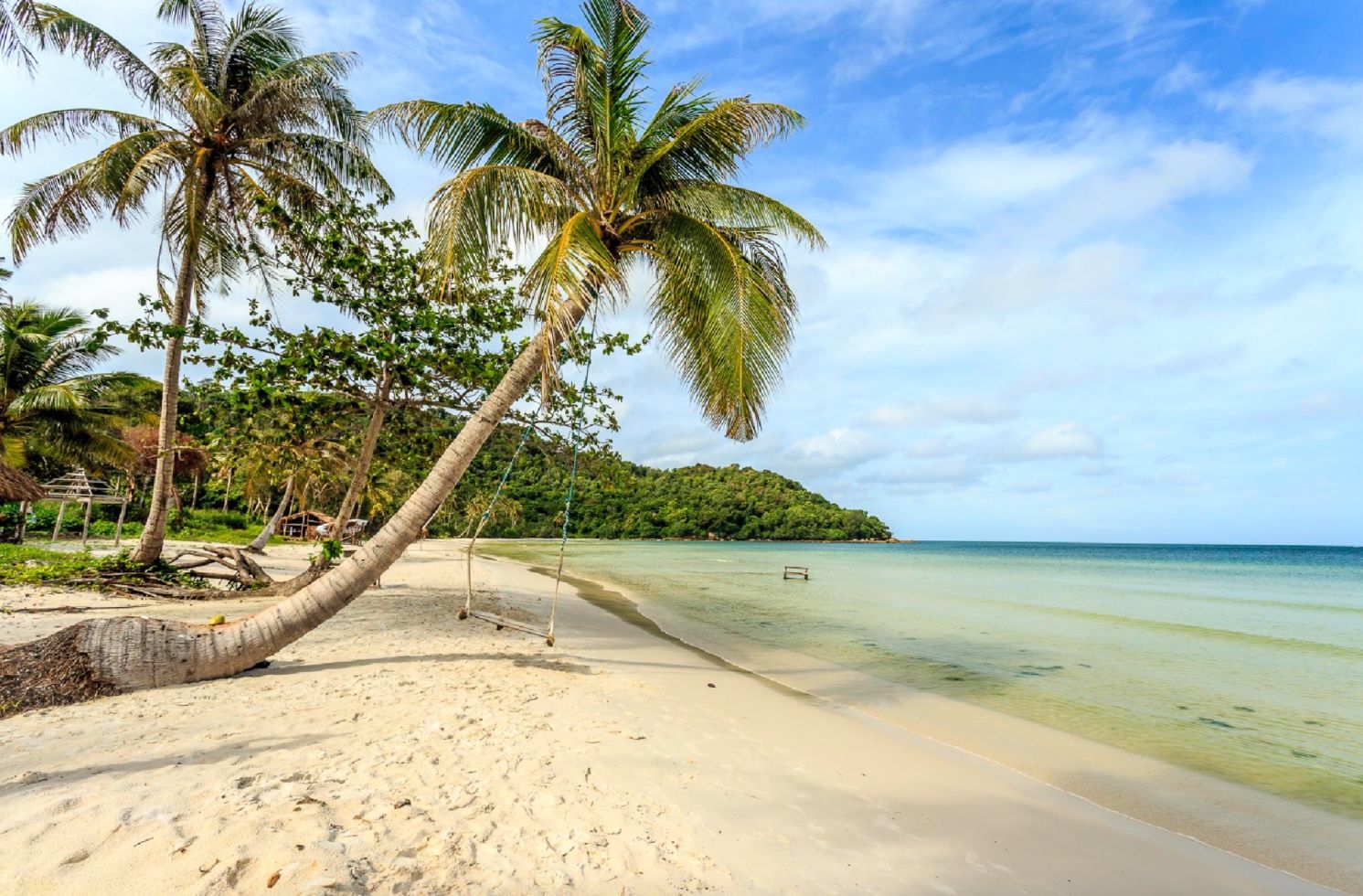
Mui Ne, located in Phan Thiet City in Binh Thuan Province, is well known for its bright coastline, steady sea breeze, and long stretches of open road beside the ocean. The area is defined by wide sandy beaches, gently leaning coconut trees, and a calm coastal lifestyle that reflects the character of southern Central Vietnam. Its combination of natural scenery and accessible routes makes Mui Ne a popular stop for travelers exploring Vietnam’s seaside regions.
Exploring Mui Ne by motorbike offers constant ocean views and easy access to local attractions. The Nguyen Dinh Chieu and Huynh Thuc Khang coastal road runs parallel to the shoreline, with the sea on one side and resorts, fishing communities, and seafood eateries on the other. Mui Ne’s sand dunes are a defining feature of the landscape, shifting in color from red to gold and white. During early morning or late afternoon, the changing light highlights their contours and creates one of the most distinctive natural scenes along Vietnam’s southern coast.
Nha trang – the beach capital of the country
Nha Trang is widely regarded as one of Vietnam’s most attractive coastal cities, known for its long sandy beaches, clear waters, and warm climate throughout the year. The city blends seaside scenery with urban energy, making it a popular stop for travelers who want to enjoy the ocean while staying connected to a lively coastal center.
Upon arrival, Nha Trang reveals a classic beach landscape of white sand, coconut palms, turquoise water, and small islands just offshore. Traveling along Tran Phu Street, the city’s most well-known coastal road, offers uninterrupted sea views on one side and a stretch of cafes, restaurants, and high-end resorts on the other. This route captures the balance between natural beauty and modern coastal life that defines Nha Trang.
Beyond the beach, the city offers a wide range of activities. Visitors can enjoy fresh seafood, snorkel around Hon Mun Island, kayak in sheltered bays, or explore nearby fishing villages. For those interested in longer road journeys, the coastal route connecting Nha Trang with Vinh Hy and Cam Ranh is often highlighted for its sweeping sea views and varied shoreline landscapes, making it one of the most scenic coastal stretches in southern Vietnam.
Dalat & other towns in Central Highlands
Da Lat is a popular escape for travelers seeking cooler temperatures, quiet surroundings, and a slower pace away from Vietnam’s busy cities. Located on the Lam Vien Plateau in Lam Dong Province, the city is often called the City of a Thousand Flowers thanks to its gardens, pine forests, and mild climate throughout the year. Morning mist, fresh mountain air, and curving highland roads make Da Lat especially appealing for exploration by motorbike.
The landscapes around Da Lat are defined by dense pine forests, clear lakes, and colorful flower farms. Routes such as Prenn Pass, Mimosa Pass, and Ta Nung Pass lead through rolling hills and open valleys, where changing light transforms the scenery from misty mornings to warm, golden afternoons. These roads highlight the calm atmosphere and natural beauty that set the city apart from Vietnam’s coastal and lowland regions.
Beyond Da Lat, the wider Central Highlands offer some of the most diverse road travel experiences in the country. Provinces like Kon Tum, Gia Lai, and Dak Lak feature forest routes, expansive coffee plantations, powerful waterfalls, and the gong culture of local ethnic communities. Traveling through Pleiku, Mang Den, and Buon Ma Thuot reveals a side of Vietnam shaped by highland traditions and largely untouched landscapes, making the Central Highlands a standout region for extended motorbike journeys.
Da Nang Beach – Central Vietnam
Da Nang is widely regarded as one of Vietnam’s most livable cities and one of its most appealing coastal destinations for road-based exploration. With a long shoreline, fine white sand, clear blue water, and a warm tropical climate throughout the year, the city offers an ideal balance between seaside relaxation and active travel. Its modern infrastructure and scenic routes make Da Nang especially accessible for travelers exploring the central coast.
The city has gained international recognition, with global travel publications such as National Geographic frequently highlighting Da Nang as a top destination in Asia. Well-known beaches like My Khe, Non Nuoc, and Bac My An attract visitors with calm waters, open views, and easy access to local seafood restaurants. These beaches are popular spots for early morning walks, swimming, and watching the sun rise over the East Sea.
Exploring Da Nang by motorbike allows travelers to fully appreciate its coastal scenery. Roads such as Vo Nguyen Giap and Hoang Sa and Truong Sa follow the shoreline and provide continuous ocean views alongside resorts and local neighborhoods. For those drawn to mountain landscapes, the route from Da Nang to Hai Van Pass is one of the most scenic in central Vietnam, where coastal views meet forested slopes and high-altitude viewpoints.
Beyond the beaches, Da Nang is home to major landmarks and outdoor activities. Visitors can see the Golden Bridge at Ba Na Hills, watch the Dragon Bridge light up on weekend evenings, or enjoy activities like paddle boarding, surfing, and river cruises along the Han River. The Son Tra Peninsula, with its forest roads and panoramic viewpoints, adds another layer to Da Nang’s appeal as a diverse and visually striking destination for motorbike travel.
Son Doong Cave – Phong Nha national park
Son Doong Cave is a standout destination for travelers drawn to adventure travel and rare natural landscapes. Located within Phong Nha Ke Bang National Park in Quang Binh Province, Son Doong holds the Guinness World Record as the largest natural cave in the world. Extending more than nine kilometers in length, with cavern ceilings rising up to 200 meters in certain sections, the cave’s immense scale creates an environment that feels entirely separate from the outside world.
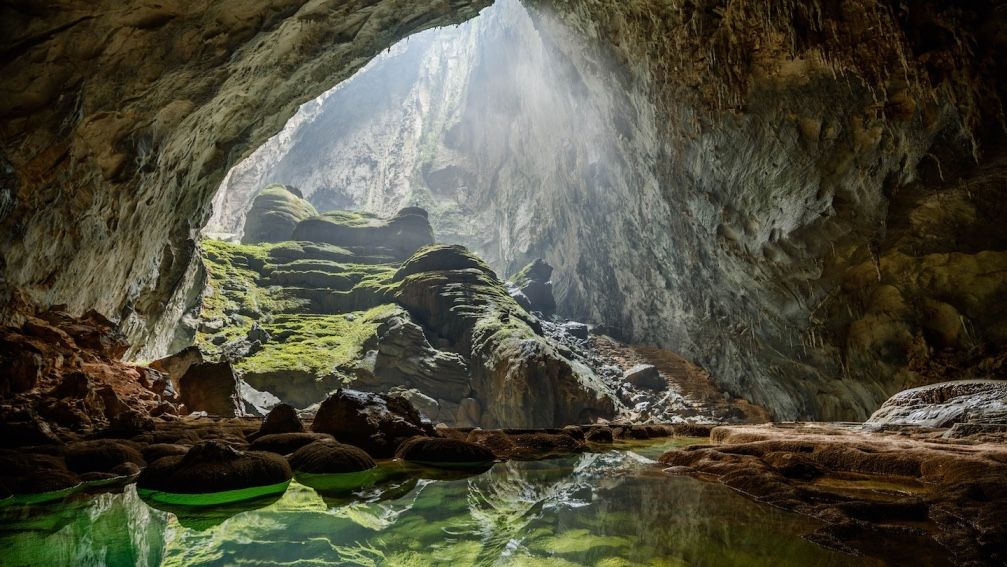
Access to Son Doong begins with a journey to Phong Nha, followed by a guided expedition that typically lasts four to five days. These tours are carefully managed and involve forest trekking, river crossings, steep climbs, and overnight camping inside the cave. Along the route, travelers encounter underground rivers, rare cave formations, and a self-contained ecosystem, including sections where dense vegetation grows beneath natural skylights.
Inside Son Doong, the sense of scale becomes even more striking. Sunlight streams through massive sinkholes, illuminating towering rock walls and creating dramatic contrasts of light and shadow. The combination of raw geology, untouched nature, and physical challenge makes Son Doong more than a sightseeing destination. It is an immersive exploration that highlights Vietnam’s extraordinary natural heritage and rewards those seeking a deeper form of adventure travel.
- Explore famous caves in Vietnam
Sapa and the Northwest Region
Sapa and the wider Northwest region of Vietnam are known for mist-covered mountain passes, layered rice terraces, and cool temperatures throughout the year. Located in the Hoang Lien Son mountain range, Sapa offers a changing landscape that shifts with the light. Early mornings are often wrapped in fog, midday sunlight reveals deep valleys and steep slopes, and late afternoons bring drifting clouds over the villages of the Hmong and Red Dao communities.
Traveling through Sapa by motorbike allows access to some of the highest and most dramatic terrain in Vietnam. The area is home to Fansipan, often called the Roof of Indochina, which rises 3,143 meters above sea level. From the summit, expansive cloud formations stretch across the mountains, offering one of the most impressive panoramic views in the country.
Beyond Fansipan, the Northwest region features several of Vietnam’s most scenic mountain routes. O Quy Ho Pass is renowned for its altitude and sweeping views, while Ma Pi Leng Pass in nearby Ha Giang continues the dramatic highland landscape. Valleys such as Muong Hoa, along with villages like Cat Cat and Ta Phin, provide opportunities to explore terraced fields and connect with local ethnic cultures, making this region a highlight for extended mountain journeys in northern Vietnam.
- Check out things to do in Sapa
Hoi An – a must visit
Hoi An, and specifically the ancient town, recognized as a UNESCO World Cultural Heritage Site, is one of Vietnam’s most atmospheric and well-preserved historic destinations. Once a major trading port between the 15th and 19th centuries, the town reflects a rich blend of Vietnamese, Japanese, Chinese, and European architectural influences. This layered history gives Hoi An a distinctive character that sets it apart from other cities in central Vietnam.
The old town retains its historic appearance with yellow-painted houses, tiled roofs softened by age, lantern-lined streets, and narrow brick pathways. Exploring Hoi An at a relaxed pace allows visitors to experience its calm daily rhythm, where traditional homes, small temples, and riverside scenes remain largely unchanged. This slower environment offers a striking contrast to the rapid growth seen in many modern urban centers.
As evening approaches, Hoi An takes on a different atmosphere. Lanterns illuminate the streets and reflect across the Hoai River, creating a soft and intimate setting. On the 14th day of the lunar month, the Lantern Festival transforms the town with traditional performances and floating lanterns placed on the river as symbols of hope and well-being.
Beyond the historic center, visitors can sample local dishes such as cao lau, mi Quang, and the well-known banh mi found throughout the town. Short rides from Hoi An also lead to An Bang Beach and Cua Dai Beach, offering a coastal setting that complements the town’s cultural and historical appeal.
Ha Giang and Cao Bang Loop
The Ha Giang and Cao Bang Loop is one of the most scenic and culturally rich road journeys in northern Vietnam. This route takes travelers through dramatic limestone mountains, deep valleys, winding passes, and remote border regions that remain largely untouched by mass tourism.
Highlights along the loop include Ma Pi Leng Pass, the Dong Van Karst Plateau Geopark, Ban Gioc Waterfall, and quiet villages inhabited by ethnic minority communities. The roads vary from smooth mountain highways to narrow highland stretches, making route planning and weather awareness essential. For travelers wondering when to visit, the best months are from September to November and March to May, when visibility is clear and temperatures are moderate. This loop is ideal for those seeking raw landscapes, cultural depth, and an authentic northern Vietnam experience.
- Check out Ha Giang motorbike tours from Hanoi
Essential Tips to Prepare Before a Motorbike Trip in Vietnam
A safe and rewarding road journey starts long before the engine turns on. Proper preparation goes beyond packing a backpack and setting off, as it includes planning your route, checking documents, preparing your vehicle, and making sure you are physically ready for the journey ahead. Thoughtful preparation helps reduce risks, manage unexpected situations, and allows you to focus on the experience rather than potential problems. Below are essential tips every motorbike traveler should consider before starting a trip in Vietnam.
Research your route and weather conditions: Review road conditions, estimated travel times, fuel availability, and daily weather forecasts. This planning helps you avoid heavy rain, landslides, or challenging mountain roads during unsafe conditions.
Prepare essential documents: Carry a valid driver’s license or an international driving permit if required, along with the motorbike registration and your passport or personal identification. These documents are often checked during road inspections.
Inspect your motorbike before departure: Make sure the engine oil, tires, brakes, lights, and indicators are all functioning properly. If renting a vehicle or joining a guided tour, choose a reliable provider that supplies well-maintained bikes, quality helmets, and clear insurance coverage.
Pack a basic first aid kit and personal medication: Items such as bandages, antiseptic, pain relief tablets, stomach and cold medicine, and motion sickness pills take little space but can be invaluable during long-distance travel or remote sections of the route.
Bottom line
Vietnam reveals its full character through road travel, where coastlines, sand dunes, historic towns, highland forests, and cloud-covered mountain passes unfold naturally along the way. Traveling across the country by motorbike allows visitors to move at their own pace, stop where the scenery calls, and experience landscapes and local life beyond the usual tourist routes. From the blue waters of the central coast to the high peaks of the Northwest, each region offers a distinct perspective on Vietnam’s geography and culture.
For travelers planning this type of journey, choosing the right support is essential. Vietnamese Motorbike Tours provides well-maintained motorbikes and professionally guided tours designed for safety, comfort, and local insight. Whether you are exploring coastal roads, mountain passes, or historic towns, having reliable equipment and experienced guidance helps ensure a smooth and rewarding travel experience across Vietnam.