
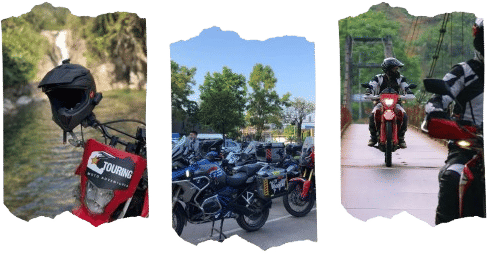

Du Gia village Ha Giang: complete travel guide
Du Gia is a Tay and H’Mong village in Du Gia commune, Yen Minh district, roughly 100 km east of Ha Giang town by road. It sits at around 1,200 metres above sea level in a valley flanked by limestone karst, terraced rice fields on the hillsides above, and the Lo River passing below. Most riders reach it as part of the Ha Giang Loop, staying one night before continuing north toward Dong Van or south back toward Ha Giang town. A few stay two nights and use Du Gia as a base to reach the waterfalls and trails in the surrounding hills.
- Check out Ha Giang tour private motorbike ride
- Motorbike tour of Vietnam
- See Alternatives to the Ha Giang Loop
This guide covers the road in, where to sleep, what to eat, and what to do once you are there.
Where Du Gia village is on the Ha Giang Loop
Du Gia sits on the DT176 provincial road between Yen Minh town and the Lo River valley. From Ha Giang town, the standard route is Highway 4C north through Quan Ba and Yen Minh, then east on DT176 for approximately 40 km to Du Gia. The total distance from Ha Giang town is around 100 km.
From Dong Van, riders coming south cover about 80 km via Meo Vac and a section of Highway 4C through steep terrain with tight hairpin turns. A shorter alternative uses Highway 4C to Mau Due junction, then turns onto DT181 for 40 km into Du Gia. The DT181 option is better surfaced but passes through less dramatic scenery than the Meo Vac road.
Du Gia is not on the main highway. It requires a deliberate turn off the Loop, which is partly why it stays less crowded than Dong Van or Meo Vac.

Road conditions on the way to Du Gia
The DT176 between Yen Minh and Du Gia is a two-lane sealed road with sections of broken asphalt and occasional gravel patches where the surface has been repaired. In dry season (October to April) the road is passable on any bike, including small semi-automatics. In rainy season (June to September) some sections develop potholes and shallow mudslides can block the road for short periods after heavy overnight rain. Check local guesthouse groups or ask at Yen Minh before riding the final stretch if you arrive during the wet months.
The Meo Vac approach on Highway 4C includes the Ma Pi Leng Pass at 1,500 metres. The pass is sealed but narrow, with sharp drops on the valley side. A separate walking path runs parallel to the road and gives better views than the road itself.
Best time to visit Du Gia
September and October are the most visually striking months. The rice terraces above the village turn gold before the harvest, and the weather alternates between clear mornings and brief afternoon rain. Temperatures at 1,200 metres in October average 18 to 22°C during the day and drop to 12 to 14°C at night.
November through February is dry and clear. Daytime temperatures sit around 15 to 20°C, but fog fills the valley most mornings until around 9 am. January and February occasionally dip below 10°C at night, which matters if your guesthouse room has no heating.
May through July is wet season. The terraces are green and planted, the waterfalls run at full volume, and the roads require more care. Most riders who visit in these months do so specifically for the waterfalls and the green rice fields.
Where to stay in Du Gia
Accommodation in Du Gia is homestay-only. There are no hotels. The homestays are run by local Tay and H’Mong families and typically include a bed in a private room or a shared dorm-style loft, a squat or seated toilet, cold-water shower, and meals included or available on request. Most have wifi, though signals drop in heavy rain.
Expect to pay 150,000 to 250,000 VND per person per night for a room. A dinner of local dishes cooked by the host family costs 60,000 to 100,000 VND extra. If you are booking in advance, direct messages to guesthouses via Facebook work better than booking platforms, which have limited coverage in this area.
The best-located homestays sit near the suspension footbridge over the Lo River, which gives easy walking access to the waterfall trail without backtracking through the village. Ask specifically when booking whether the homestay is on the river side or the main road side.
Food in Du Gia village
The most common meal at a Du Gia homestay is a shared table of four to six dishes: steamed or sticky rice, stir-fried vegetables from the family’s garden, a protein dish, and a soup. The protein is usually pork, duck, or freshwater fish from the Lo River. Portions are large. This is not restaurant food, it is family cooking.
Specific dishes to look for in the village:
Five-colour sticky rice (xôi ngũ sắc). Glutinous rice dyed in five colours using plant extracts: black from black sesame or carbon, red from gac fruit or hibiscus, yellow from turmeric, purple from butterfly pea flower, and white left natural. It is eaten at festivals and sometimes available at homestays on request or at weekend markets.
Thang co. A slow-cooked stew of horse, buffalo, or beef with offal, spiced with star anise, lemongrass, chili, and dried cardamom. It is a H’Mong dish associated with highland markets and cooler weather. The flavour is strong, slightly gamey, and very rich. It is most available at Yen Minh market rather than in Du Gia itself, but homestay hosts can prepare it if you ask a day ahead.
Men men. Steamed maize flour eaten as a staple by H’Mong families, particularly in leaner seasons. Texture is coarser than cornmeal polenta. Eaten with a meat or vegetable dish alongside it.
Sour pho (phở chua). A cold or room-temperature dish with rice noodles, roasted pork, fried shallots, roasted peanuts, and a thickened broth acidified with rice vinegar. It is a specialty of Ha Giang town and Yen Minh rather than Du Gia specifically, but some homestay cooks prepare it. The cold broth is the defining feature and takes adjustment if you expect the usual hot bowl.
Corn wine (rượu ngô) is distilled locally and served at most homestays. Alcohol content runs 35 to 45%. Hosts will offer it at dinner. Declining politely is fine.
Things to do in and around Du Gia village
Tham Luong waterfall
Tham Luong is the main waterfall near the village, located approximately 2 km from the centre on a foot trail that starts near the Lo River suspension bridge. The waterfall drops around 50 metres over a limestone face into a pool large enough for swimming in dry season. The trail takes 25 to 35 minutes on foot one way. It is not signposted well; ask your homestay host to mark the path on a map before you leave.
In rainy season the pool at the base is too turbulent for swimming, but the volume of water makes the waterfall more dramatic. The path becomes slippery after rain.
Du Gia waterfall
A second waterfall, sometimes called Du Gia waterfall to distinguish it from Tham Luong, sits about 15 km from the village toward Yen Minh on the DT176. It is around 50 metres high and visible from a viewing area beside the road. Access is easier than Tham Luong since you can ride to within 200 metres of it, but the swimming area is smaller.
Terraced rice fields
The terraces above Du Gia are farmed by H’Mong families and are active agricultural land, not a designated viewpoint. Walk or ride the dirt tracks above the village to see them at closer range. The best light is between 6 and 9 am, when the mist sits in the valley and the upper terraces catch early sun. The September and October harvest period brings the most visual contrast between gold terraces and green lower fields.
Lo River and the suspension bridge
The wooden and cable suspension bridge over the Lo River is the main crossing point for the village. It handles foot traffic and motorbikes up to around 150 cc. The river below is 30 to 40 metres wide at Du Gia and clear enough for wading in dry season. Local children swim here in the late afternoon.
The village itself
Du Gia village has a Saturday market where Tay, H’Mong, and Dao traders gather from the surrounding hills. It is smaller than the Dong Van or Meo Vac markets but less crowded and more focused on daily goods than tourism. Arrive before 8 am for the active trading period.
Self-ride vs guided motorbike tour to Du Gia
Riding to Du Gia on your own is possible if you have experience on mountain roads and are comfortable navigating by GPS or paper map on roads with limited signage. The DT176 and DT181 are not difficult by Ha Giang Loop standards, but a wrong turn on dirt tracks in the hills can add an hour or more to the journey.
A guided tour makes more sense if you want someone to handle route logistics, homestay bookings, and the language barrier at remote stops. A guide who knows the area will also know which homestay hosts cook well, which waterfall path is currently passable, and when the Saturday market runs. On a self-ride trip, you spend time on logistics that a guide handles in a few minutes.
The Ha Giang Loop as a whole, including Du Gia, is one of the more technically demanding motorcycle routes in northern Vietnam. Riders who underestimate the roads, particularly the Meo Vac approach via Ma Pi Leng, create real safety risks for themselves and for others on the road. If your off-road or mountain riding experience is limited, a guided tour is the better starting point.
Practical notes before you go
Fuel is available in Yen Minh town and at one small roadside seller in Du Gia village. Do not assume the village seller will be open or stocked. Fill up in Yen Minh.
ATMs are in Yen Minh and Ha Giang town. There are no ATMs in Du Gia. Bring cash.
Mobile signal in Du Gia is variable. Viettel has the most consistent coverage in Ha Giang province. Vinaphone works in Yen Minh town but drops out on some sections of DT176 before the village.
The road from Ha Giang town to Du Gia takes 2.5 to 3.5 hours depending on stops and road conditions. From Dong Van via Ma Pi Leng, plan 3 to 4 hours. These are mountain roads. Do not try to rush them.
Bottom line
Du Gia is one of the few stops on the Ha Giang Loop that still functions primarily as a village rather than a tourist infrastructure point. The homestays are family-run, the food is cooked in someone’s kitchen, and the waterfalls require a walk rather than a parking fee. That will likely change as the Loop gets more traffic, but for now Du Gia rewards riders willing to slow down for a night or two. The combination of the Lo River valley, the terraced hills, and direct access to Tham Luong waterfall makes it a better overnight stop than the more crowded towns further north.
About the author
Hamid is a rider and long-term Ha Giang regular based in Hanoi. He has ridden the Ha Giang Loop more times than he counts, including several off-season runs in January fog and September mud. His tours focus on the less-documented stops, the villages between the famous viewpoints, and the roads that don’t make it onto the standard Loop sheet. His tours are reviewed by riders from Europe, North America, and Australia as among the most well-prepared in northern Vietnam, with particular praise for route knowledge and local contacts at homestays most travellers walk past.
Du Gia village FAQs
How do I get to Du Gia village from Ha Giang town?
From Ha Giang town, take Highway 4C north through Quan Ba and Yen Minh, then turn east on DT176 for approximately 40 km to Du Gia. The total distance is around 100 km and takes 2.5 to 3.5 hours depending on stops and conditions. Fill up fuel in Yen Minh before the final stretch.
Is Du Gia suitable for beginner motorbike riders?
The DT176 into Du Gia is manageable for riders with basic road experience, particularly in dry season. The Meo Vac approach via Ma Pi Leng Pass is more demanding and not recommended for inexperienced riders. If your mountain riding experience is limited, a guided tour is the safer option for the Ha Giang Loop overall.
What accommodation is available in Du Gia?
Du Gia has homestays only, run by local Tay and H’Mong families. Expect a private room or shared loft, basic bathroom facilities, and meals available from the host family. Prices run 150,000 to 250,000 VND per person per night. Book directly via Facebook message rather than booking platforms, which have limited coverage in the area.
When is the best time to visit Du Gia?
September and October offer the most striking scenery, with gold rice terraces before harvest and mild temperatures. November through February is dry and clear but cold at night. May through July brings full waterfalls and green rice fields but requires more caution on the roads. Avoid riding the final stretch to Du Gia during or immediately after heavy rain in wet season.
Is there an ATM or mobile signal in Du Gia?
There are no ATMs in Du Gia. Withdraw cash in Yen Minh or Ha Giang town before arriving. Mobile signal is variable. Viettel has the most reliable coverage in Ha Giang province. Vinaphone works in Yen Minh but can drop out on sections of DT176 approaching the village.
How far is Tham Luong waterfall from Du Gia village?
Tham Luong waterfall is approximately 2 km from the village centre on a foot trail starting near the Lo River suspension bridge. The walk takes 25 to 35 minutes one way. The trail is not well signposted, so ask your homestay host to mark the path before you leave. In dry season the pool at the base is large enough for swimming.
The Explore blog

Motorcycle Riding Laws in Vietnam for Foreign Tourists

Best Time of Year for Motorcycle Tours in Vietnam (Weather Guide)

Road Conditions in Vietnam: What Motorbike Riders Should Expect

Is Vietnam Safe for Motorcycle Tours? An Honest Guide for Riders

What Is a Motorcycle Tour in Vietnam and Who Is It Best For?
